
Roses are Red, Violets are Blue: Poetry to Say “I Love You”

Share

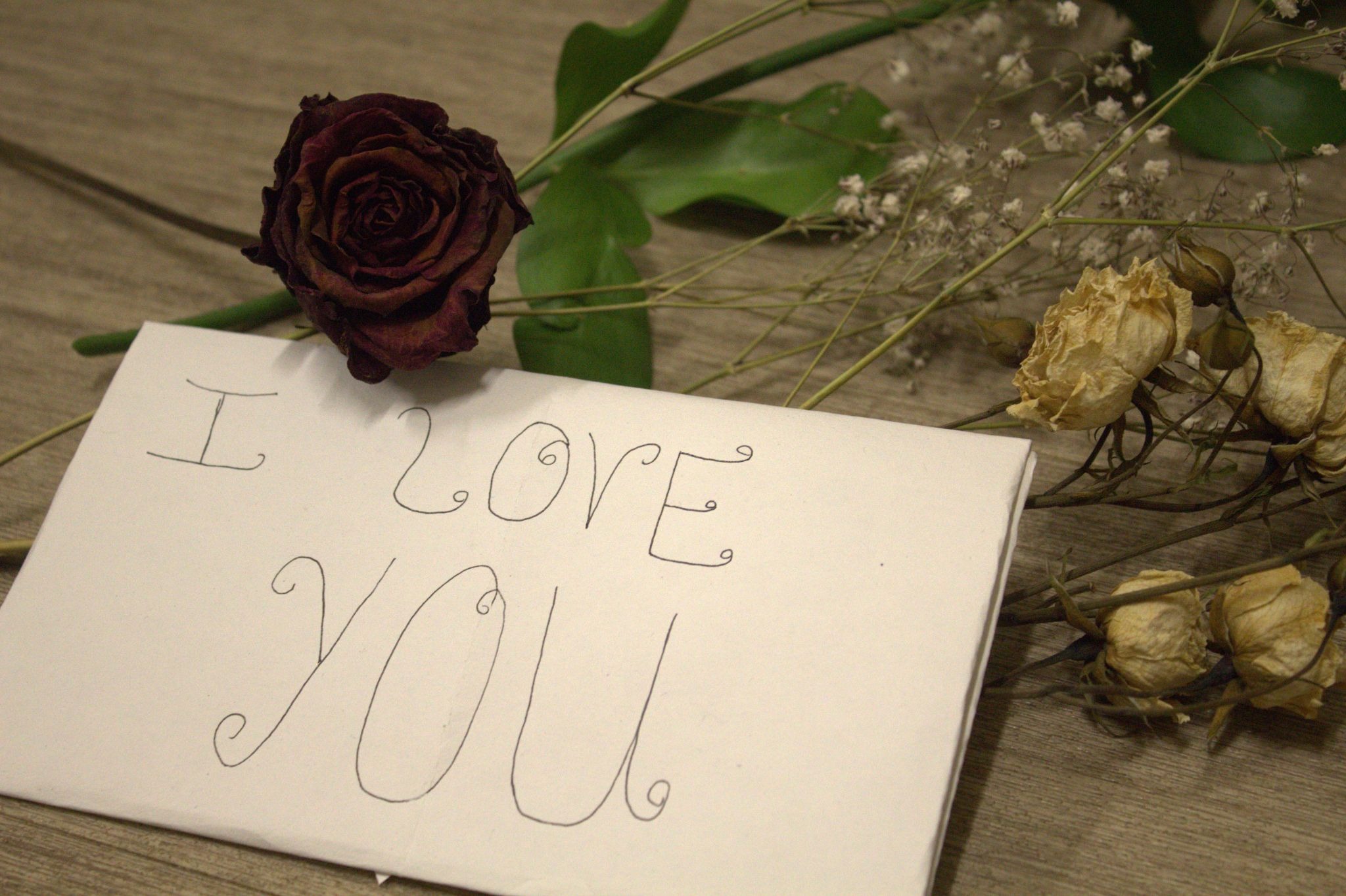
First of all, let us try this little exercise. Wherever you are reading this, close your eyes and take a moment to meditate. Focus on the howling of the wind, the rhythm of footsteps around you, the creaking of your bones as you move, and everything else you might not notice without focusing on the hustle and bustle of everyday life. What do you think when you listen to it? Most likely, your answer is nothing, but it is in that very nothingness that we find an enormous ability we rarely practice: introspection.
To clarify, introspection refers to shifting one’s gaze away from the chaos of the external world and turning it toward the inner chaos that governs one’s own actions and moods. By turning our attention inward, introspection bridges the gap between the language of the conscious mind and the realm of the unconscious, where our true personality and desires lie. Building a bridge like this is especially beneficial for self-knowledge and for achieving what is often difficult self-understanding. But what is even more important is that introspection greatly helps us identify and regulate our own emotions, especially when that special someone comes along and we do not know how to react to them.
However, since it is understood that achieving introspection is truly difficult for the average busy mind, this article aims to teach one of the most effective ways to achieve introspection: romantic poetry. That is why this article will teach you, starting from the basics, how to construct a poem—not only to help you uncover a deeper aspect of your personality, but also as a simple and most charming way to express your feelings for someone else. What a heartthrob!
Step 1: Taking Inspiration
Let us try meditating again. But this time, you might need a quieter place—or any place that feels right for what is coming—because it is going to be intense.
Instead of focusing on the hidden sounds of nature, recall your most cherished moments with the person you long for most. Focus especially on what made you feel more excited than usual. Remember their face, the shape of their lips, the shine of their hair, the curve of their smile, the sparkle in their eyes, the tone of their voice, even the last words they spoke to you. Focus on everything about this person that brings you joy and compare it to an idea. This idea does not necessarily have to be something abstract and unreal—though that would add creative value—it can simply be an act or gift you have planned, such as a confession or simply expressing your appreciation. The point of this exercise is to navigate through your emotions to the object that triggers them. In this case, what is it that attracts you to your muse, and what would you like to do with them?
Using Examples for Inspiration
If you’re still struggling to find something that inspires you, that’s normal—and it’s okay. After all, the most confused and clouded minds are often the ones that harbor the most intense emotions. That’s why deciphering them is often a common challenge. If you find yourself at this point, try reading some poetry to familiarize yourself with the topics at hand. Examples provided by the Megaphone team include: “The Spill” by Kyle Tran Myhre, “The Quiet World” by Jeffrey McDaniel, and “Una Mañana” by Jose Jose. You don’t need to read these specific texts to understand what a romantic poem is; you can also read the lyrics to your favorite songs, since romantic poetry is almost always hidden behind all those magical rhythms and sounds.
The goal of seeking inspiration is to touch the deepest chords of the mind and make them resonate in a melody. In simpler terms, the goal is to try to connect the emotions we feel with some external element that evokes that same overwhelming sensation, in order to determine the intensity and depth of your love. Why do you choose to love this person, and what motivates you to keep loving them?
Step 2: The Real Deal
Starting to write a poem seems to be the hardest part of the process, because when you try to Google how to write a poem, the first thing that comes up is a bunch of fancy words. “Sonnets,” “elegiac poems,” “odes”: what is all that? And why are they written so weirdly? However, finding inspiration was actually the hardest part of the whole process. So, if we set literary theory aside for a moment, writing a poem becomes much simpler. After all, the structure of a poem depends entirely on the poet and the poem itself. In any case, you can write whatever and however you want.
To start putting our thoughts into words, we will need the most essential element of a written poem: descriptive language. Drawing on the inspiration from the first step, we should use external elements to create figurative characters and connect our deepest thoughts to real life. For example, do you like flowers? Does the person you like remind you of one? Then, describe how these elements evoke the same emotions in you.
Becoming Fancy
Once you’ve finished brainstorming, try fitting each word into a structure to shape the poem. Shaping a poem isn’t the same as writing a sonnet or an ode in their specific metrical schemes; the goal here is to maintain a steady rhythm that gives the poem both rhyme and personality. Rhyme not only makes the poem captivating, but it also helps the brain exercise and think of new ways to express the same idea. By giving each verse a consistent rhyme, you create a personal signature in every line that illustrates the different ways your emotions adapt and take shape to convey the same passion. This lends authenticity to your poem, setting it apart from others, especially when you want to dedicate your thoughts and words to someone.
Finding a writing style that also incorporates rhyme can be especially daunting when you don’t have a vast mental vocabulary. It’s common—and that’s okay. Even the best writers struggle with it. In that case, here are some websites that might help with this challenge. To break verses down into syllables and find rhymes, you can use: www.howmanysyllables.com. To find words that rhyme, an excellent option is www.rhymezone.com. To find synonyms, if you want to show off your writing skills, the most reliable site is www.wordreference.com. And, to find the definitions of those same synonyms, a dictionary would come in very handy: www.merriam-webster.com.
Pro-Tip: A poem without emotion is just a bunch of flowery words strung together in a weird-shaped paragraph. So put your heart into those lines the same way you would move your hips when dancing salsa!
Step 3: Polishing

The simplest step is to revise the poem, but it is also the one that takes the most time. Once you have finished the first draft of your poem, do not assume it is already complete, because it really is not. During the writing stage, if you followed the other steps correctly and focused on conveying everything inside you, you will have noticed a certain sense of euphoria and flow in the process. This euphoria represents your level of focus and progress in unleashing your introspection, because instead of thinking with your head, you began to think with your true self—your heart. However, by not thinking with your head, you also did not consider whether what you were writing made sense. So, most likely, you accidentally skipped some words and strangely wrote other verses. That is why you should reread your poem several times until you notice those errors. However, these errors are not grammatical or spelling mistakes. These errors are more complex, and you will only identify them by using your intuition.
Remember that you are now the poet and that you express your feelings through your poems, so intuition, above all else, is essential. You are not an essayist guided by logic, nor a novelist guided by the coherence of a plot. You have descended into the deepest human simplicity—emotions—, and you must focus solely on that. Therefore, relying solely on your own intuition, reread your poem until you find the phrases that you feel are still limited and could use more description. Also, look for other verses that could be rewritten so they can be interpreted differently. And finally, consider how you could improve the rhythm of your poem so that when read aloud, it sounds like a song.
The Moment Everyone Has Been Waiting For
What comes next is the hardest part—get ready. Once your poem is finished, show it to the person you dedicated it to and give it to them. Sounds simple, right? And it is—it is just two small steps: going over and giving it to them. However, after playing with so many emotions and juggling them for so long to write that magnum opus, you are more sensitive than usual. You have been connected to your inner self for a long time, and that has heightened your level of introspection.
By doing everything you were told to do to write a poem, you set aside time to think deeply, you searched through the chaos of your emotions to find a starting point, you shaped that chaos to bring order to it, you composed it in a way that would be understandable to the average reader, and best of all, you figured out how to do all of this without even realizing it. That is how simple it is to be introspective. By achieving a good level of introspection, you are able to identify your true desires, beliefs, and personal values. These three elements together help you become a more complete person—one with goals, a critical mind, and mental well-being. That is why, the next time you feel emotionally confused, write a poem about how you feel and how you would like to feel. It might not be about making someone love you, but it is certain that by writing poetry, you are writing a love poem to yourself—and that matters above all else.