
Machines for Empathy: Amor Towles on ‘The Novel’

Share

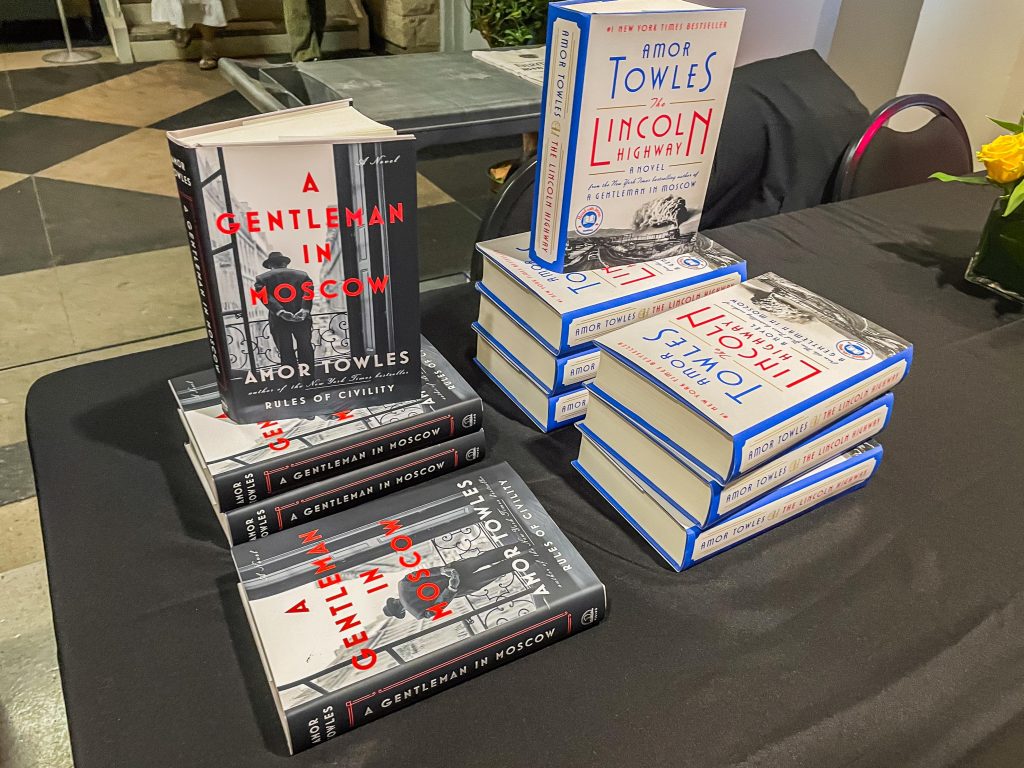
Popular names have previously set foot on Southwestern University’s campus, with icons such as Margaret Atwood, Bell Hooks, and Jane Goodall. The 2026 Roy & Margaret Shilling Lecture on April 15th allowed SU to add yet another outstanding person to that list of individuals, Amor Towles. Towles is a New York Times Bestselling author, and his catalogue includes books like Rules of Civility and A Gentleman in Moscow. In discussion with Southwestern’s very own Dr. Eileen Cleere, the head of the English department, Towles sat down to talk about his books, the artistry of “the novel”, and his writing process in front of a packed and almost-at-capacity Alma Thomas Theatre.
The “evening of elegance” opened with a quick introduction from President Trombley discussing the history of the Shilling lecture, which was established by The Brown Foundation, a long-standing supporter of Southwestern. The lecture series is intended to present internationally prominent speakers on a wide but interdisciplinary range of topics relating to ethics, service, and public policy. The most recent Shilling lecture prior to this one occurred in 2023, hosting poet Kevin Young. As the last few audience members ranging from SU students to the retirement community of Georgetown trickled in, the elegant night started.
Dr. Cleere began her discussion with Towles by bringing up the concept of “genre”, asking if he sees his work as historical fiction. Although his books are set in the past, Towles does not deem them fitting of the genre of historical fiction; it almost feels like a constraint for him to perceive it that way when he is writing. He mostly focuses on three things in his process: the imagery, language, and emotional context. These factors set the scene and allow the ideas to flow. Especially interested in tone of voice, he stated that “part of the artistic story is that I want the language of the story to reflect the inner life of those characters.” By “retooling” language he is able to create a scene of a story that seems historical.
In observation of his work, Dr. Cleere mentioned that his books maintain a balance between the material and ephemeral, between time and timelessness. Towles replied that he’s not really interested in writing “timely” work; it ties back to feeling like a constraint. He stated, “If I had to write a timely topic, I would fail to make the kind of work I’m striving to create.” The creativeness must consistently flow and not be particularly put into a box in the initial writing process—the novel is an art form. Thousands of elements of the craft are put into play to create a truly ‘well written’ novel. He stated that a well written novel can be read by anybody with any background and still take away significance from reading it. Towles wants to write a novel that achieves that dynamic, that is his goal.
Novels are machines for empathy. Towles told the audience that he believes the novel can evoke more feeling than film or even music—the experience of reading is unlike that of any other. In no other art form can you be put in the place of another human being. Empathy remains one of the most powerful and humanistic emotions, and to best achieve it when consuming art, you must be a reader. To see the world through someone else’s eyes grants a perspective that nothing else can; it is the most beautiful thing about fiction.
Towles advised young writers to step outside of their comfort zone, and not stick to writing from their individual perspective and experience only. As reading the novel puts you in someone else’s shoes, the writing of the novel must start somewhere similar as well. A point of learning evolves from that experience itself, and is quite significant to the process of the writer.
With the release of his most recent book, Table for Two, Towles was able to try the step outside his comfort zone in different ways than he’s done before. The book is actually a collection of short stories, and those require a completely different style of involvement. He discussed that the first fifty pages of a novel are supposed to be introductory, and are supposed to orient the reader into the story they’ve just gotten into. For the short stories, however, you are thrown in. There is great liberty in the short story writing form, and the trick is to make the reader believe that when they can finally piece the full story together, it suddenly ends. The short story is a form of questioning; it quickly draws the reader in, captures them, and then releases right as they think they understand what is happening. Towles compared the experience to sitting at dinner at a restaurant and overhearing the couple next to you arguing, and once you think you’ve caught on, they’ve left.
He stated that he’s a big fan of everything he’s written about, and while Dr. Cleere tried pointing out specific themes, almost stunting him with her articulate questions, he admitted that “themes” are just what he discovers as he tells his tale—they overflow from the subconscious.
Briefly touching on the television adaptation of his novel A Gentleman In Moscow, he answered Dr. Cleere’s curiosity on the depth of his involvement in its production. He told the audience that while he was included in the hiring of the director and leading actor (Ewan McGregor) and actress (Mary Elizabeth Winstead), he did not uphold much creative liberty in the project at all. Winning a fantastic audience reaction, he jokingly said “not only do they not wanna know what you think, they wish you were dead.”
Adding on to this discussion of types of media, Dr. Cleere pitched the tricky yet relevant question, what do you see for long-form fiction in these times of short attention spans? Towles’ response was a view on culture and the history of it, and he tried not to sound too ‘dooming’ in the meantime. He stated the observation that “the speed at which the cultural work is being made has accelerated, and the speed it gets to you and the speed in which you take it in has accelerated.” Everything now is go go go! In this hectic transition, we must focus on the work that was created slowly, as taking it in and consuming it must also match the slower pace because that is where the nourishment lies. He further stated that “the flow of information is moving at such a fast pace so shallowly, it is consuming us” rather than us consuming it. We need to allow our short attention spans to consume longer-form fiction. By doing so, we can counteract this rapid excession of short-form media, and properly consume media again.
After their discussion went long–Towles was electrically enthusiastic and engaged, not wanting it to end–the floor opened to audience questions. One of the more memorable questions for SU asked what books Towles would recommend to college students. He first recommended his favorite novel, War and Peace by Leo Tolstoy. He then continued to mention Moby-Dick by Herman-Melville, One Hundred Years of Solitude by Gabriel García Márquez, Anna Karenina by Tolstoy, and ultimately anything by Toni Morrison. He further encouraged that if you find a book you truly like, go read more by that author. There is a reason you loved the story—don’t go looking for it elsewhere when it is right in front of you. Further, become your own professor by assigning yourself books; it can turn into quite the enriching experience.
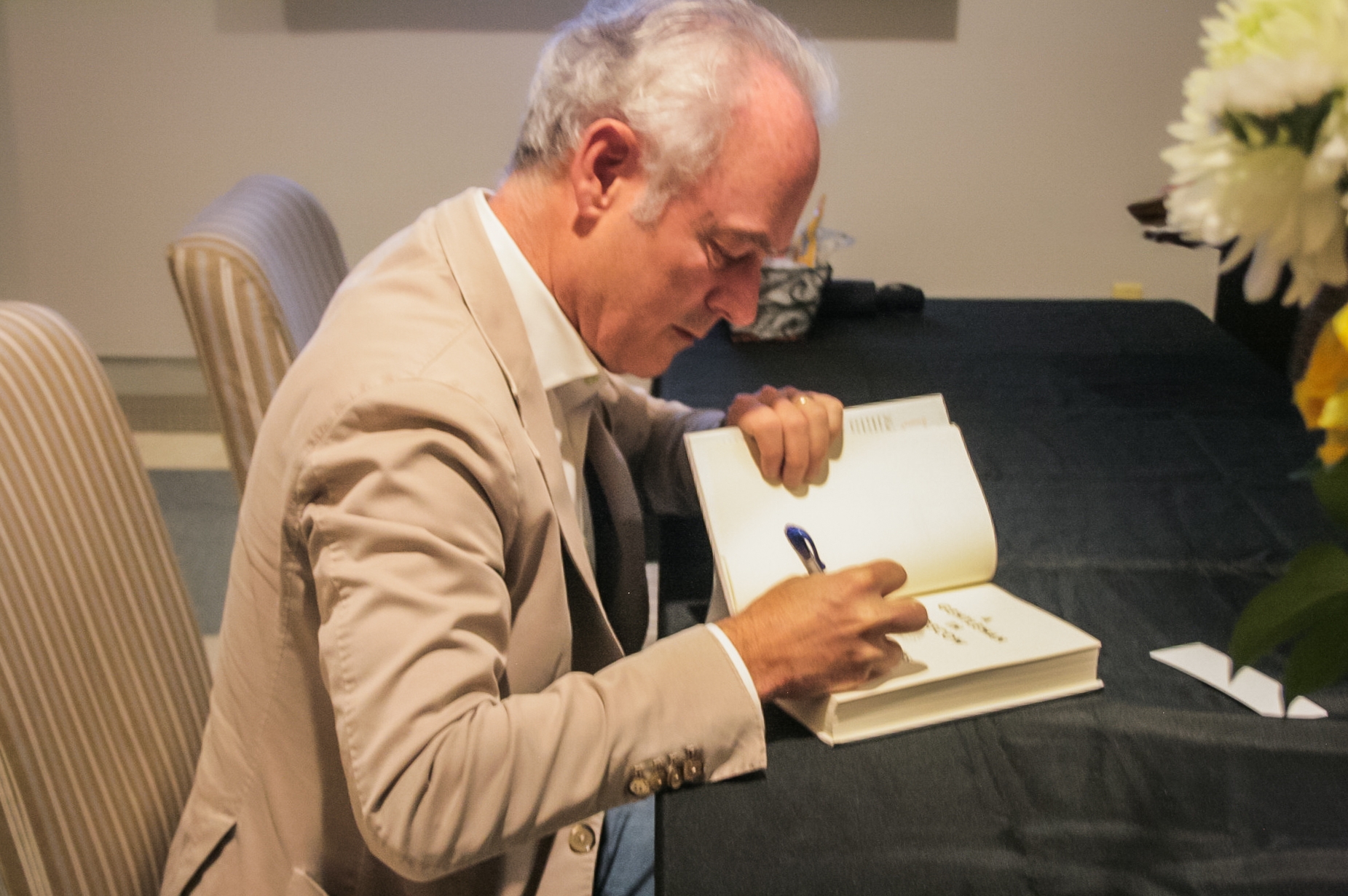
Towles talked just a bit more after the questions, highlighting some of the humorous messages he receives from the “contact me” part of his website. The audience roared with laughter as he cracked jokes about how intricately detailed these inquiries were, and he created a special connection with the Georgetown community that night. When he left the stage, he sat in the lobby for another hour signing books and interacting with everyone who stood in the very lengthy line to talk with him.
The 2026 Shilling lecture proved to be quite the success, combining the fans of literature and those with a passion for writing right here on Southwestern’s campus, thanks to the vibrant intellect of Amor Towles.