
Mooncakes and Memories: Welcoming the New Season with the Mid-Autumn Festival

Share

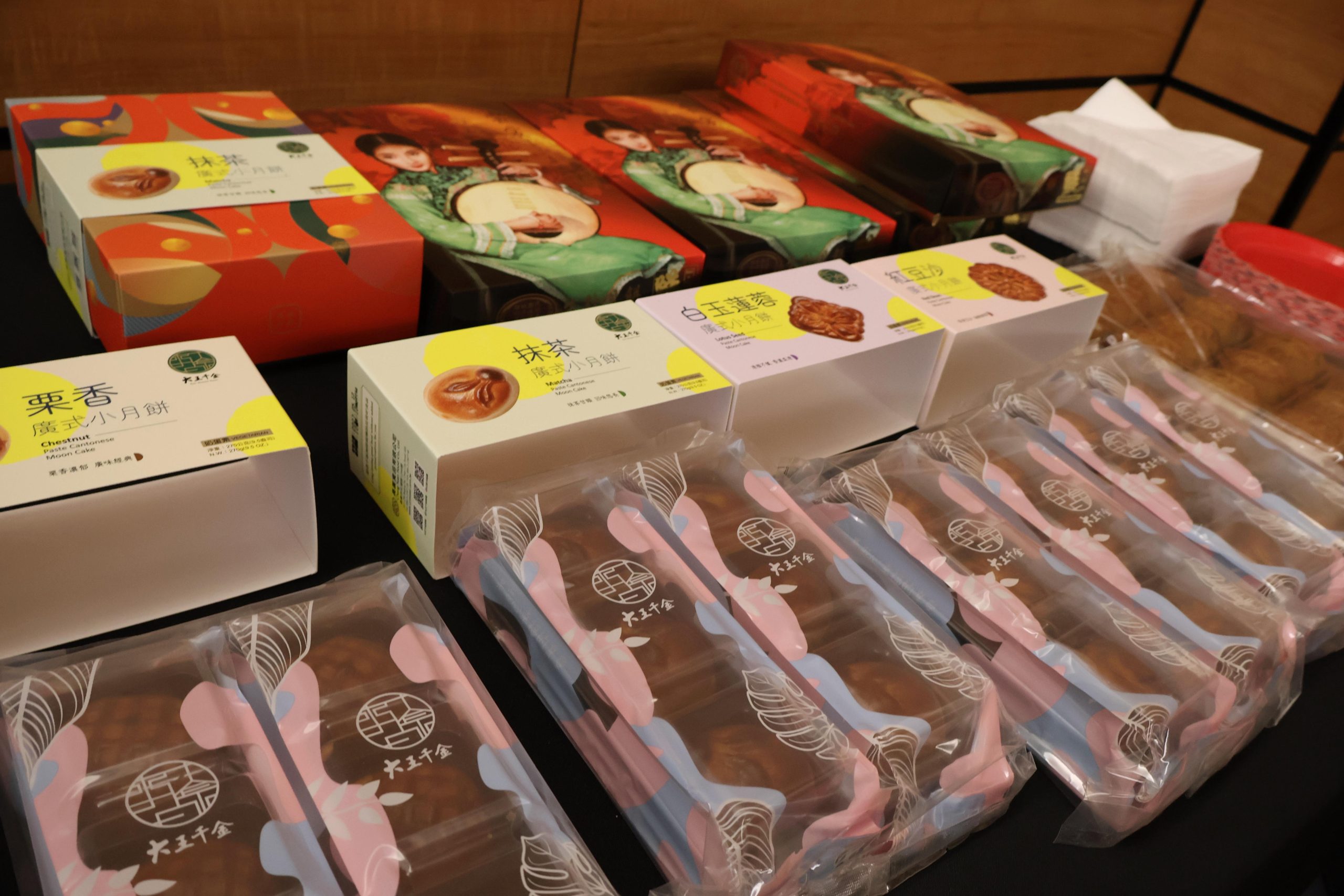
On the fifteenth day of the eighth month of the Chinese lunar calendar, is the celebration of the Mid-Autumn Festival, a harvest festival celebrated in Chinese culture. Also known as the Moon or Mooncake Festival, the Mid-Autumn Festival is one of the most celebrated holidays in China and dedicates its festivities to honor the full moon and reuniting with family and loved ones. Although in 2026 it is celebrated on September 25th, Southwestern started their annual celebration on September 24th.
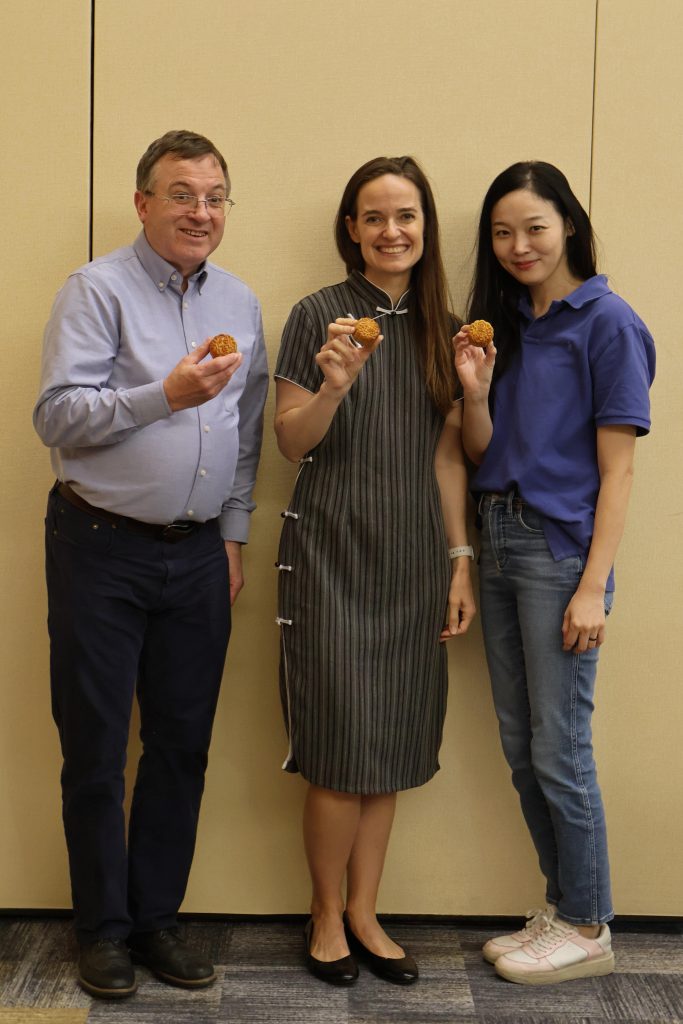
Organized by the Asian Student Association (ASA) and hosted by Professor Allison Miller, the celebration began with a gathering of faculty and students, each getting an opportunity to connect with each other. Before the presentation, students enjoyed an assortment of mooncakes and tea, available to try and taste. There were various flavors of mooncakes, including the traditional red bean, lotus seed, matcha, and even pineapple. After grabbing their mooncakes, both students and faculty sat down to watch a short presentation about the meaning of the Mid-Autumn Festival, beginning with a video on the festival’s history.
So what is the story behind the Mid-Autumn Festival you may wonder? It all began with the story of Chang’e and her husband, Hou Yi, who was a very skilled and heroic archer. Long ago when the Earth was circled by ten suns. One day, all ten suns appeared in the sky, scorching the lands, drying up the water, and killing the people and animals. Hoping to stop the destruction, the emperor sent Hou Yi to shoot down nine of the ten suns. After climbing up the Kunlun Mountains, Hou Yi raised his bow and released nine arrows, striking nine suns, saving all the people and wildlife. As a gesture of gratitude, the Goddess of Heaven gave Hou Yi an Elixir of Immortality so that he could continue to protect the emperor and the Earth.
However, Hou Yi did not wish to gain immortality without Chang’e, his beloved wife, so he asked Chang’e to keep it safe for him for a future time. After his heroic deed, Hou Yi became famous and began teaching students archery. However, one student named Pang Meng went to the school not to be taught by Hou Yi, but instead to steal the Elixir of Immortality for himself. So one night, when Hou Yi was hunting with his students, Pang Meng stayed back pretending to be unwell, went into his house and tried to force Chang’e to give him the elixir. Knowing she had no chance of protecting the potion from Pang Meng, Chang’e immediately drank the elixir. The elixir made her fly so high she reached the moon, where she became immortalized as the Moon Goddess.
When he returned, Hou Yi was heartbroken by the loss of Chang’e. But while wailing in desperation toward the sky, he noticed the moon was extremely bright that evening, and saw a figure that looked exactly like his wife. Hou Yi prepared some fruits and cakes he knew Chang’e loved under the moon in the hope she would see how much he missed her and return back to him. The Mother of the Moon was moved by their love and allowed Chang’e to reunite with Hou Yi every year on the full moon of the eighth lunar month, now known as the Mid-Autumn Festival.
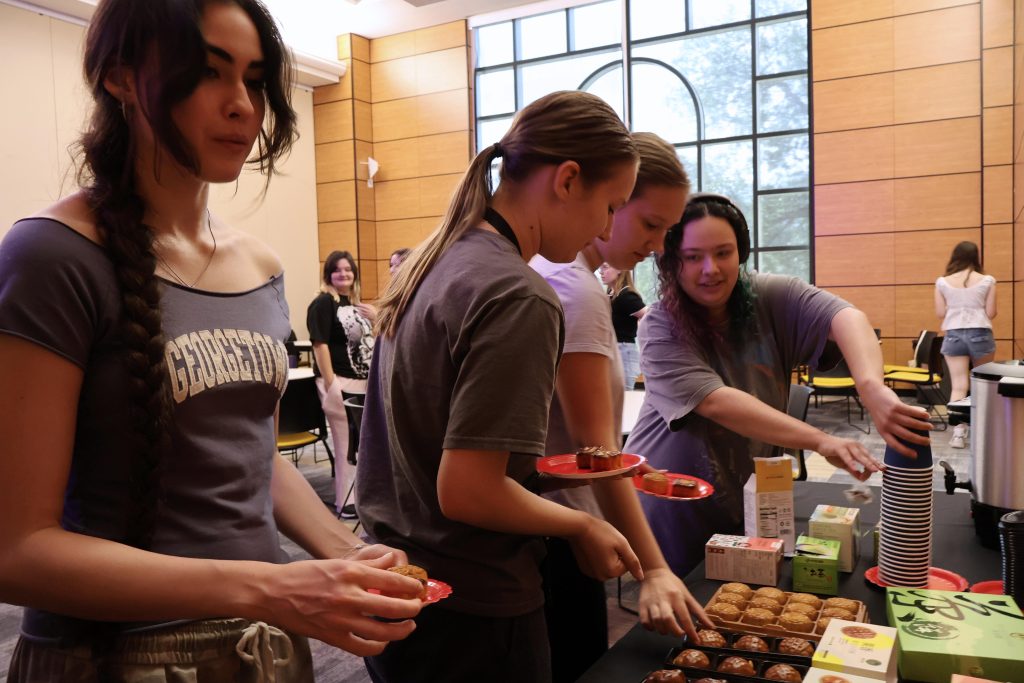
In honor of Chang’e’s sacrifice, mooncakes are the must-eat food during the Mid-Autumn Festival as their circular shape symbolizes the moon as well as reunion and happiness. And you can clearly see this intention in action as students enjoyed the mooncakes, trying each one with their friends, sharing stories about their day, and getting an opportunity to spend time with each other. After watching the video about the Mid-Autumn Festival, we were introduced to some poems about the moon by acclaimed Tang dynasty poet Li Bai, most notably “The Old Ballad of the Bright Moon.”
Concluding the slideshow, we listened to Teresa Tang’s The Moon Represents My Heart, a song regularly played during the Mid-Autumn Festival. Bringing together everyone from family, friends, and loved ones living far away, this love song uses the moon as a metaphor for deep feelings of devotion and loyalty, which encapsulated the central theme of the Mid-Autumn Festival. Following the presentation, students and faculty joined together to chat and eat, connecting and reconnecting, embodying the spirit of the holiday together.
Southwestern’s Mid-Autumn Festival celebration not only allowed an opportunity for the community to come together, but also allowed a chance to learn about an important foreign holiday that is celebrated around the world. If you are interested in more events like these, make sure to follow ASA on Instagram to keep up to date.