
A Hand up, Not a Hand Out: Unhoused in Georgetown

Share

Co-written by: Ileana Walk and Grace Hunter
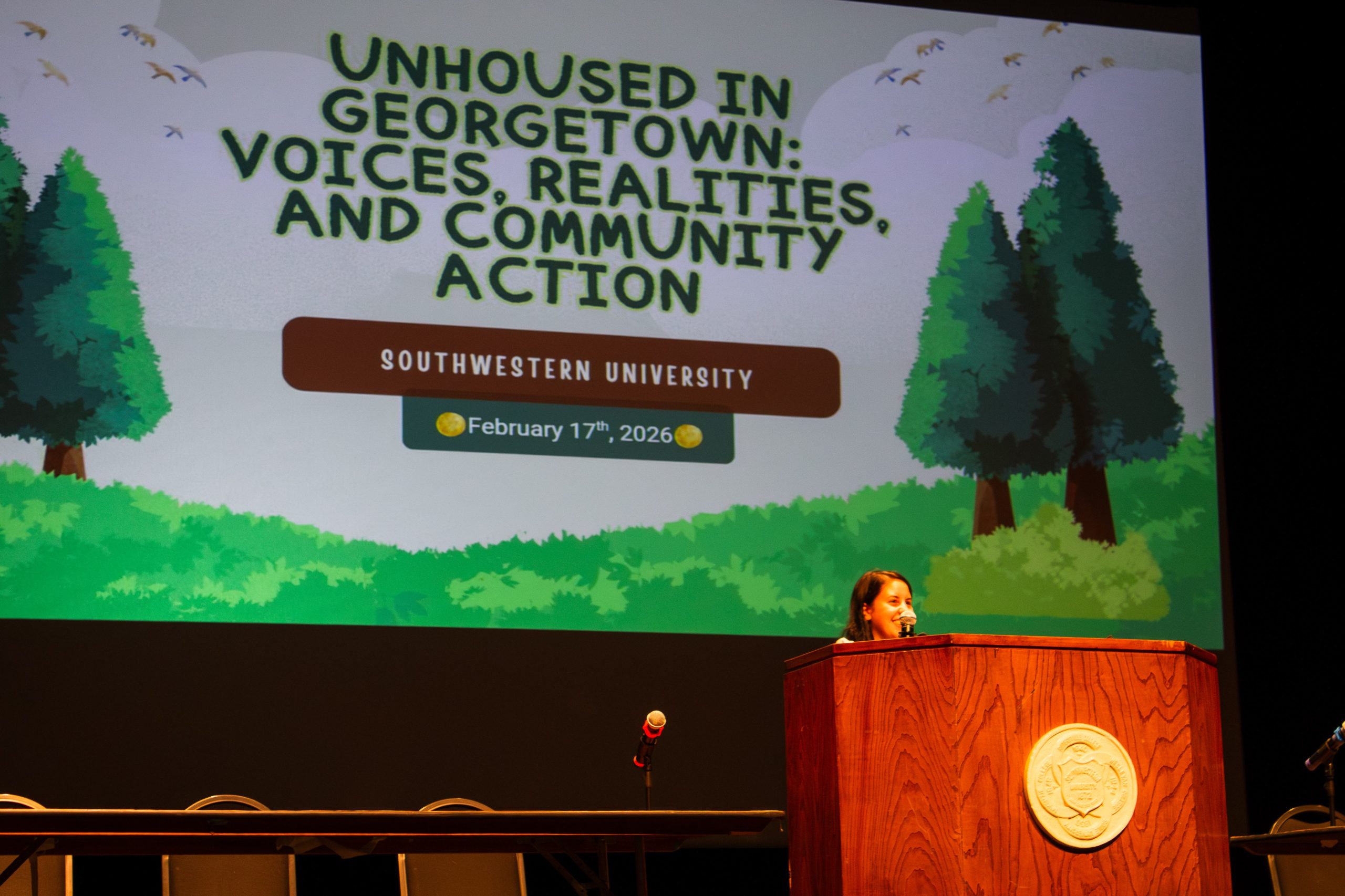
On Tuesday, February 17, members of our community gathered in the Alma Thomas theater for an evening of connection and conversation concerning unhoused populations in Georgetown. The event began with a preface by Dr. Stephanie Insalaco, who shared her thoughts on current political issues related to the unhoused community. She explained that her involvement in raising awareness about this issue stemmed from her interest in local parks, which she believes should function as safe and familiar environments that provide basic resources to the unhoused community. She discussed the increase of homelessness as a social and political issue, and shared the relevance of this topic with the growth of hostile architecture and anti-homeless policy in Georgetown.
Following Dr. Insalaco’s introduction, Manda Wittebort, director of Public Engagement, spoke to emphasize the importance of learning from different perspectives and coming together to educate and connect regardless of our different backgrounds. She shared a small difference we can all make by replacing the phrase “active citizen” with “good neighbor.” She stated that “active citizen” is riddled with harmful connotations, often contributing to feelings of “othering.” With this mindset of empathy, she invited the audience to be present in the space, offering grounding techniques to accept the coming stories as gifts.
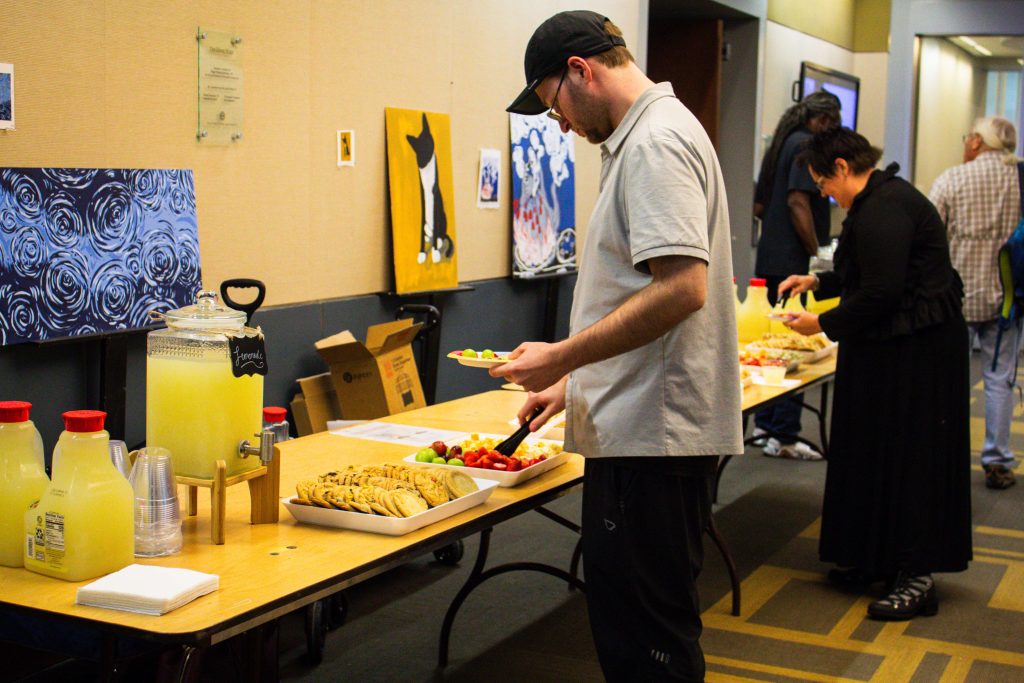
Several community partners involved in supporting the unhoused population in Georgetown were invited to speak at this event, sharing the inspiration, logistics, and experience of serving the unhoused community. They provided insight into how their role affects the lives of our unhoused neighbors. Their speeches were dubbed “lightning talks.”
Michelle Augustine with the Navigation Services of Georgetown spoke first. She opened her statement with a powerful line: “Where are you sleeping tonight?” She urged the audience to reflect on their privilege and step outside their comfort zone in considering how they can give of themselves and their resources to support the unhoused community. She discussed small technicalities, including difficulties involved with a lack of identification and navigating bureaucratic systems. She offered the idea of “a hand up, not a hand out,” promoting resources that allow people to gain self-sufficiency. She spoke about her organization’s successes in helping neighbors find employment, housing, and gain social services.
Nathaniel Bonner with the Helping Hands of Georgetown spoke next. He explained that this organization began by handing out sandwiches and has transformed into a food pantry that provides not just groceries, but transportation and hot Sunday dinners for those in need. He shared his personal connection to the cause, describing his experience receiving bagged meals during a time of need and displaying his personal gratitude for the organization.
Kathy Bond from Kat Kares talked to the audience next. She explained that the inspiration for her nonprofit drew from wanting to provide those experiencing homelessness with what they truly need, demonstrating this idea through providing home-cooked meals with the opportunity to sit in community around a table. She spoke about different barriers that the homeless face, explaining the difficulty that an individual living in their car would have with finding a place to park and stay overnight. She explained that it is illegal in Georgetown to sleep outside or in one’s car, illustrating that recent ordinances and policies have made it difficult for the unhoused to find spaces to be. She ended her speech by saying, “They could use an advocate.”
Lindsay Kocen with the WilCo Homeless Coalition followed. She described her experiences with homelessness as a child and young adult, which lent her insight into the difficulty of accessing social services. She referred to herself as a “peer specialist,” demonstrating that her experience gave her the opportunity to help others. She tied this into the work her coalition does in generating data pertaining to homeless individuals, helping her coalition–a subdivision of the Texas Housing Network–gain more information as to how best to alleviate the issue.
Amy Pratt from the Neighbors in Need Pantry through First Presbyterian Church spoke next. She opened her sentiments by sharing “They chose us,” referring to the people they serve. She explained that the church’s proximity to the downtown area gives much-needed access to the services it provides. Beyond being a simple food pantry, this organization provides coffee, clothes, blankets, and other items depending on donations. Amy shared that the need for these services became apparent during the COVID-19 era and alerted the community to the rising issue of homelessness.
Dwight Richter from Neighbors First spoke last. He shared his perspective on the issue as a long-time Georgetown local, explaining that his involvement in the issue came from the policies enacted to chase unhoused populations away. He offered his opinion on locked doors and anti-loitering policies in parks, openly saying that he was not a fan of these exclusionary and dehumanizing policies. He shared his experience communicating with the city, quoting leaders as saying that recent ordinances were enacted to “disrupt the ecosystem created by the unhoused population.” He relayed his movement in lobbying to reverse these policies that affect not only the unhoused population but everyone in the community.
After the lightning speakers, a panel of five currently unhoused community members walked on stage to share their stories, providing insight into the experience of being unhoused. The first was Daniel, who discussed his experience moving to Texas from Oregon and being homeless for 20 years. The first thing you notice about Daniel is his positive outlook on life. Rather than framing his experience of nearly dying from the recent hill country floods as frightening, he described waking up surrounded by water as comedic.
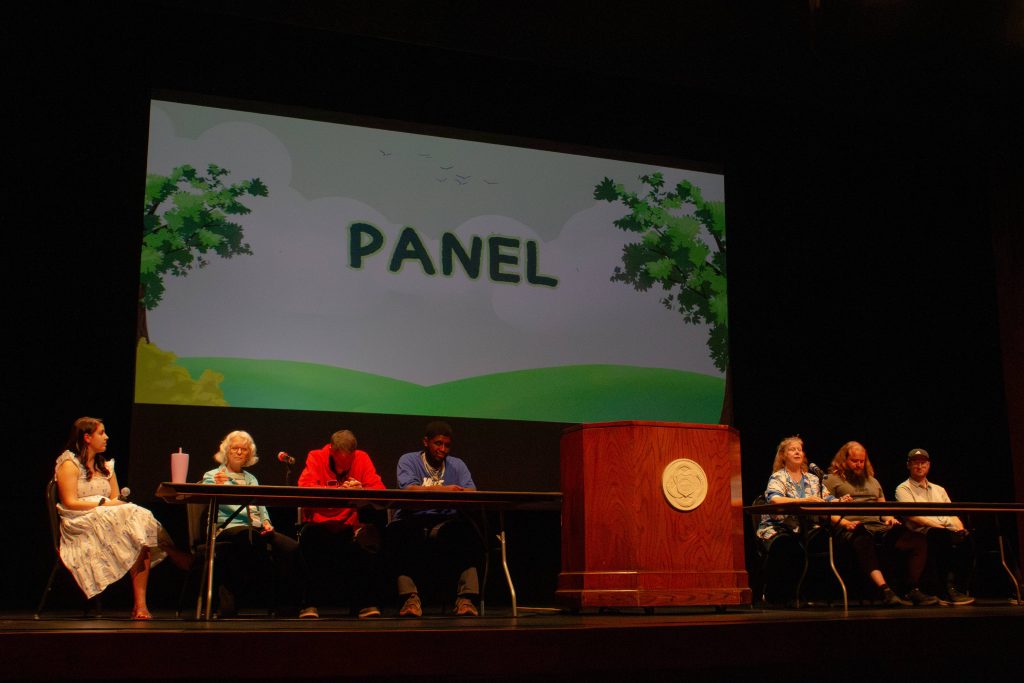
This positive outlook was similarly shared by the next panelist, Timothy. He described his journey to Houston, living in his car, and ending up in Georgetown when his car broke down. He expressed his desire to help out people in similar situations by working on and off, and he related this to his wanting to “leave the rat race” and quit working for people who would discard him.
A man named Davon followed. Davon described his desire to help other people afflicted with homelessness, as he has seen the impact of letting others help him. He bravely shared his story of being abandoned by his parents, becoming briefly incarcerated, and struggling to get a job due to these factors. He repeated his desire to be independent and to “do right,” urging the audience to also “do right.”
Tony shared his story afterward. He told the audience about his horrific motorcycle accident, which led him to be hospitalized for three months. When he was released, he had lost his bank account and apartment. He was homeless. He described his incident as “God’s way of telling him to have a heart,” stating that through this experience, he learned some valuable lessons and gained much-needed compassion.
Lisa spoke next. She chronicled her situation of living in an RV until the roof collapsed. She was evicted from the RV park and began living in her truck. She shared that through a business she worked with, she met a couple who trusted her with the keys to their office, where she has lived for three years. Her heartwarming story illustrated the impact of selflessness and generosity. She also pointed out that most Americans are one major incident away from losing everything, and it doesn’t cost anything to be kind.
The panel was followed by a brief Q&A, where audience members had the opportunity to ask panelists further questions about their experience of being unhoused, including what resources they have found to be helpful and what college students can do to help alleviate their struggle. These questions and emotional, authentic responses provided a deeper understanding of the struggle and resilience of members of the unhoused community and inspired audience members to consider how they can serve their neighbors.
The evening ended with several calls to action by Manda Wittebort. She emphasized the importance of education and raising awareness as the first step in supporting the unhoused community. She then encouraged the audience to take risks, call their representatives, connect with community partners, and take their own initiative, illustrating the impact of meaningful connection and individual action in humanizing and advocating for the unhoused community.