
FILM BROS VOL. 4: A FOOL-PROOF GUIDE TO AWARD SEASON / 2025/2026 SEASON RECAP

Share

Just like Hip-Hop trio Whodini once said: The freaks come out at night – Sunday nights, specifically, through the months of November to March. “The freaks”, known familiarly as film fanatics, Letterboxd lurkers, or possibly cinema consumers, are gathering in online spaces and real life parties to celebrate the phenomenon of awards season: A long haul of excitement, frustration, twitter memes, and good old fashioned drama. But if you aren’t in one of these circles, it may be hard to keep up with awards season, or you might not even understand what it actually is. Never fear, dear reader, as the Megaphone Film Bro is here to educate you on the history of each award, walk you through the 2025-2026 season, and show you how to prepare for the next beloved cycle.
First, let’s start with the basics. What awards are we talking about, when do they take place, and why are there so many ceremonies?
Which award shows are considered a part of award season?
Since the season technically takes place over a four to five month period, it varies from source to source what is actually included in the season. The Wikipedia article, for instance, links every single ceremony that takes place in that timeframe. Seems easy enough. However, lines blur once you start trying to decipher film season from a popular culture lens. Really, how many people know what the New York Film Critics Circle is? For the purpose of this article, I will be going off of what I deem to be the “socially relevant” ceremonies, which I judged based on a very academic study: I asked my mom and dad which ceremonies they had heard of or seen news from. The list they gave me was as follows–Critics’ Choice Movie Awards, Golden Globe Awards, Producer Guild of America Awards, Directors Guild of America Awards, Writers Guild of America Awards*, Actor Awards, British Academy Film Awards, Golden Raspberry Award, and the Academy Awards. A note: This article will be extremely “America-centric”, as this list is mainly covering award shows that take place in America and are meant to highlight Hollywood feature films, with the exception of foreign film categories. A full list of all film awards internationally can be found here.
Is each show really that different?
If you only look at a list of nominees, there truly isn’t that much of a difference ceremony to ceremony. This leads people to mistakenly believe that there is no variation show to show, or that the ceremonies just exist solely to build hype for the Oscars. However, if you look into the history of each award, this is not entirely true.
Critics Choice Movie Awards: This one might seem obvious–the Critics Choice Awards are chosen by…critics. Specifically, around 600 critics and journalists based in the US and Canada. Due to the critical and scholarly nature of the awards, this show (which is the earliest listed event in this article) is often a great example of “what is popular in the box office may not be what wins awards”.
Golden Globe Awards: In simple terms, the Golden Globes are the worldly, party-girl older sister of the Critics’ Choice, and the less popular yet influential younger sister of the Academy Awards. The Golden Globes are voted on by the Golden Globes Foundation, a group of international journalists and film critics. Importantly (and controversially), the Globes separate films into two categories– “Drama” and “Musical or Comedy”. While this implies some interesting opinions on movie genres, it allows for double the amount of winners, which is always fun and an intriguing way to decipher the front runners in the race going forward.
Producer Guild of America Awards: The first in the “Guild trio” (see, Directors Guild and Writers Guild), this ceremony focuses specifically on awarding outstanding Producers, who are in charge of budget, overseeing casting and hiring, and marketing of the films.
Directors Guild of America Awards: The second in the “Guild trio” (see, Producers Guild and Writers Guild), this award focuses on Directors and all of the work they put in to bring a film’s collective vision to life.
*Writers Guild of America Awards- The third in the “Guild trio” (see, Producers Guild and Directors Guild) and probably the most mainstream out of the three, the Writers Award focuses on screenplays, offering two distinct awards for “Best Original” and “Best Adapted” screenplays. Recently, the Guild has been under intense scrutiny due to an unfair labor practice strike proposed by the Writers Guild Staff Union (WGSU). Because of this, the Los Angeles ceremony was cancelled, although the New York ceremony still went on. As of the writing of this article, the strike is still ongoing. In my best effort to uphold solidarity and respect the picket lines, I will not continue any coverage of this event. However, I did want to include it in the preliminary list so that readers could do their own research if they wanted, as well as the winners list briefly where it applies.
Actor Awards: Formerly known as the Screen Actors Guild Awards, they changed the name to properly reflect the awards purpose–this is an honor voted on by actors, for actors. As the official website states, “The only televised awards ceremony to exclusively honor actors, The Actor Awards presents 15 awards in TV and film. Voted on by SAG-AFTRA’s robust and diverse membership of 160,000+ performers – The Actor Awards has the largest voting body on the awards circuit.”
British Academy Film Awards: I like to refer to this one as the weird British cousin of the film world. Often one of the last broadly reaching award shows before the Academy Awards, the BAFTAs often have a weird energy surrounding them–most movie enthusiasts already have their ballots solidified, frontrunners (usually) have been determined, and people are frothing at the mouth to see… British people? Though sometimes partial to British performances or productions over objectively better foreign films, The BAFTAS also have a history of upsetting fan favorites and giving underdogs big and historic wins.
Golden Raspberry Awards: Ok, this one is on here for fun, I must admit. Known as the Razzies, this ceremony highlights the absolute worst in film from the past year. Although rightfully critiqued as occasionally hateful, sexist, racially insensitive, and generally mean-spirited, the Razzies do hold an important spot in film history as a database of what was considered “bad” any given year.
Academy Awards: If you ask any random person on the street which awards show they are most likely to tune into, it is absolutely going to be the Academy Awards—also known as the Oscars. These are voted on by around 10,000 Academy members, all of whom are participants in the film industry. Because this award is voted on and awarded by someone’s peers in the industry, it is often considered the most “honorable” or “important” award. It also stands as the oldest and longest-running worldwide award ceremony.
When does each show take place, and does the order matter?
The answer to this question is a complicated one. Yes, the order does have some meaning. The Oscars stand as the ultimate and most prestigious event in awards season, and every ceremony is ultimately leading up to the “season finale”. When laid out on a timeline, there is also a theme to the order, where critic-voted awards are given earlier in the season, and peer-voted awards are given later. However, the order of the season does not necessarily indicate anything about who will win any given award. While it is true that, oftentimes, an actor or film that wins one or several awards will win the following, this is not always the case. Some years, there is extreme variation from ceremony to ceremony on who or what wins the award, such as this past year in the “Best Supporting Actress” category.
Below I have listed the average time of the year when each show takes place, based on data from previous years.
Critics’ Choice Movie Awards: Varies significantly, usually in mid-January, at the latest early February.
Golden Globe Awards: Usually the first Sunday in January.
Producer Guild of America Awards: Varies significantly, but usually a Sunday in late February.
Directors Guild of America Awards: Varies significantly, but usually a Saturday in early February.
Actor Awards: Last Sunday in February, occasionally the first Sunday in March.
British Academy Film Awards: Last two Sundays in February.
Golden Raspberry Awards: Typically the Saturday before the Oscars ceremony.
Academy Awards: First two Sundays in March–though historically the Oscars vary extremely based on broadcasting schedules.
So, what did I miss during the 2025/26 season?
The quick answer: You missed one of the most exciting–and infuriating–seasons of the decade so far. Several films achieved notoriety both with critics and the general public, such as the fan-favorite horror darling Sinners, the child-magnet musical Kpop Demon Hunters, the sprawling epic One Battle After Another, and the heartbreaking historical drama Hamlet. Plus, a large amount of healthy competition occurred in each category, with winners varying immensely show by show. I’ll go through the biggest categories first, and then we will discuss the history that was made this season.
Best Picture
This category was entirely swept by Paul Thomas Anderson’s One Battle After Another, plus one win for Chloe Zhao for Hamnet in the “Drama” category at the Golden Globes. Interestingly, although a sweep did ultimately occur, One Battle After Another never felt 100% safe in the lead, with films like Sinners and Hamnet also in the mix.
Best Actress
This category, rightfully, was swept by the great Jessie Buckley for her defining performance in Hamnet. Rose Byrne won the award in the “Comedy” category at the Golden Globes for If I Had Legs I’d Kick You.
Best Actor
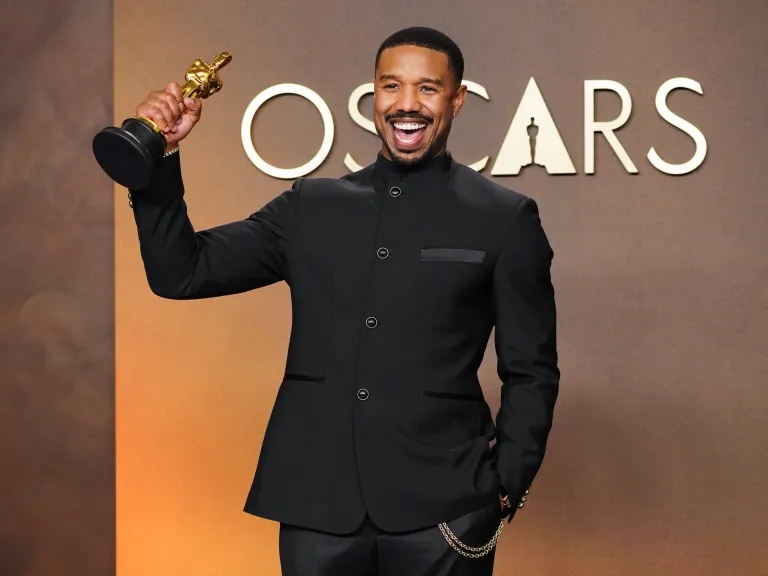
The first of many incredibly complex categories, Best Actor saw four men win an award. Timothee Chalamet won the Critics’ Choice and the comedy Golden Globe for Marty Supreme, Wagner Moura won the drama Golden Globe for The Secret Agent, Robert Aramayo won the BAFTA for I Swear, and Michael B. Jordan won the Actor Award and, ultimately, the Oscar for his performance as the Smoke-Stack twins in Sinners.
Best Supporting Actress
Another extremely divided category, this award was split between three women. Wunmi Mosaku won the BAFTA for Sinners, while Teyana Taylor won the Golden Globe for One Battle After Another. Amy Madigan, who was surprisingly–yet so deservingly–nominated for her performance as Aunt Gladys in the summer screecher Weapons, won both the Critics’ Choice and the Oscar.
Best Supporting Actor
Yet another acting category that was split into threes! The Critics’ Choice went to Jacob Elordi for his portrayal of the Monster in Frankenstein, while the Golden Globe went to Stellan Skarsgard for Sentimental Value. Sean Penn, however, dominated (controversially) the Baftas, Actors Awards, and ultimately the Oscar for his sickening performance of Colonel Lockjaw in One Battle After Another.
Best Director
Another sweep, Paul Thomas Anderson brought home every award for One Battle After Another.
Best Screenplay (Original)
This category is a visual representation of the ultimate ‘showdown’ between Sinners and One Battle After Another. Paul Thomas Anderson brought home the Golden Globe, while Ryan Coogler brought home the Critics Choice, BAFTA, Writers Guild, and ultimately, the Oscar.
Best Screenplay (Adapted)
Once again, another One Battle After Another sweep, led by Paul Thomas Anderson!
Best Original Score
Considering the movie is about the power that music has to connect people from a variety of backgrounds and perspectives, it’s extremely poetic that Ludwig Goransson swept the Original Score category for his culture-bending work on Sinners.
Best Animated Film
When looking back on 2025 in animation, it’s no surprise that Kpop Demon Hunters took home most of the awards, including Critics Choice, Golden Globes, and the Oscars. However, Zootopia 2 did bring one award home for the Disney overlords by winning the BAFTA.
Best Original Song
To anyone who has spent any time with a child under the age of 12 in the past year, it makes immediate sense that Kpop Demon Hunter’s “Golden” swept the Best Original Song category, being the first Kpop song to win the award at the Oscars.
Best Foreign Language Film
Finally, the foreign language category was split fairly evenly between Brazil’s The Secret Agent and Norway’s Sentimental Value, with the former taking the Critics’ Choice and Golden Globe and the latter taking the BAFTA and, ultimately, the Oscar.
Historic Moments
Finally, I would like to highlight some of the notable moments that occurred. Admittedly, this part of the article will be very Oscars-focused, because it is much harder to find intel on the other shows.
- It was a big year for horror! Considering the historic and groundbreaking run that Sinners had (more on that later) or Amy Madigan’s victory for her portrayal as an ancient bald witch, it’s safe to say that the horror genre had one of its best years since the show’s conception. Amy Madigan and Michael B. Jordan join a very prestigious list of only six other award winning horror performances.
- Sinners domination + a historic win for cinematography and screenwriting. Sinners broke the academy record for most nominations, with 16 spread over various categories. Out of several awards the film did win, two stand out as especially sweet. Best Cinematography was won by Autumn Durald Arkapow for Sinners, the first woman and the first Black person to win the award. Ryan Coogler also took home the statue for Best Original Screenplay, becoming the second Black man to do so–interestingly enough, both times that a Black man has won, it has been for a horror movie, with 2025 having Sinners and 2017 having Jordan Peele’s Get Out.
- It’s a… tie?! The seventh tie in Oscars history occurred when both The Singers and Two People Exchanging Saliva were announced as winners for the Best Live-Action Short Film category.
- A win for Ireland! After her complete domination of every other show, Jessie Buckley cemented her legendary status by winning the Best Actress Oscar–and becoming the first Irish woman to ever do so.
How do I prepare for the next awards season?
You’ve been equipped with the knowledge. You understand the history. Your next move? Go to the movies! We are already almost a third of the way through the year, and several early awards contenders have hit theaters. Films like Project Hail Mary and The Drama, starring current Hollywood A-listers Ryan Gosling (PHM) and Zendaya and Robert Pattinson (The Drama) are current front-runners for various acting, creative, and production awards. Send Help, a sleeper hit by Sam Raimi, has a knockout performance by the beloved Rachel McAdams (one of the best in her career, if you ask me). Several prominent directors and franchises have releases coming this summer and fall, including the conclusion of the Dune trilogy, Christopher Nolan’s The Odyssey, The Hunger Games: Sunrise on the Reaping, Steven Spielberg’s Disclosure Day, and Michael, a Michael Jackson biopic. Fans of the indie, fringe, and/or weird will also be eating well this year, with the horror renaissance in full swing with releases like Hokum, Lee Cronin’s The Mummy, Kane Pixel’s beloved The Backrooms, Obsession, Passenger, Evil Dead Burn. The return of horror’s favorite comedy franchise with Scary Movie 6, the Japanese films Exit 8 and Godzilla Minus Zero, and Robert Eggers’ Werewulf. Other films that aren’t on the public radar but should be include Mother Mary, A24’s The Invite, Digger (a rumored favorite for awards, aka the point of this article), Is God Is, and The Dog Stars. If I listed every interesting movie set to release in 2026, this article would be extremely long and very boring. Using sites like IMDB, Instagram, or Letterboxd, you can find your next “most hyped” movie. Happy exploring! You have until November, you flowering film fan, so get after it! Who knows–you might even have the next viral Instagram reaction post.