Recognizing Abuse in the Month of Love and Beyond

Share

TW: Discussions of abuse, including sexual
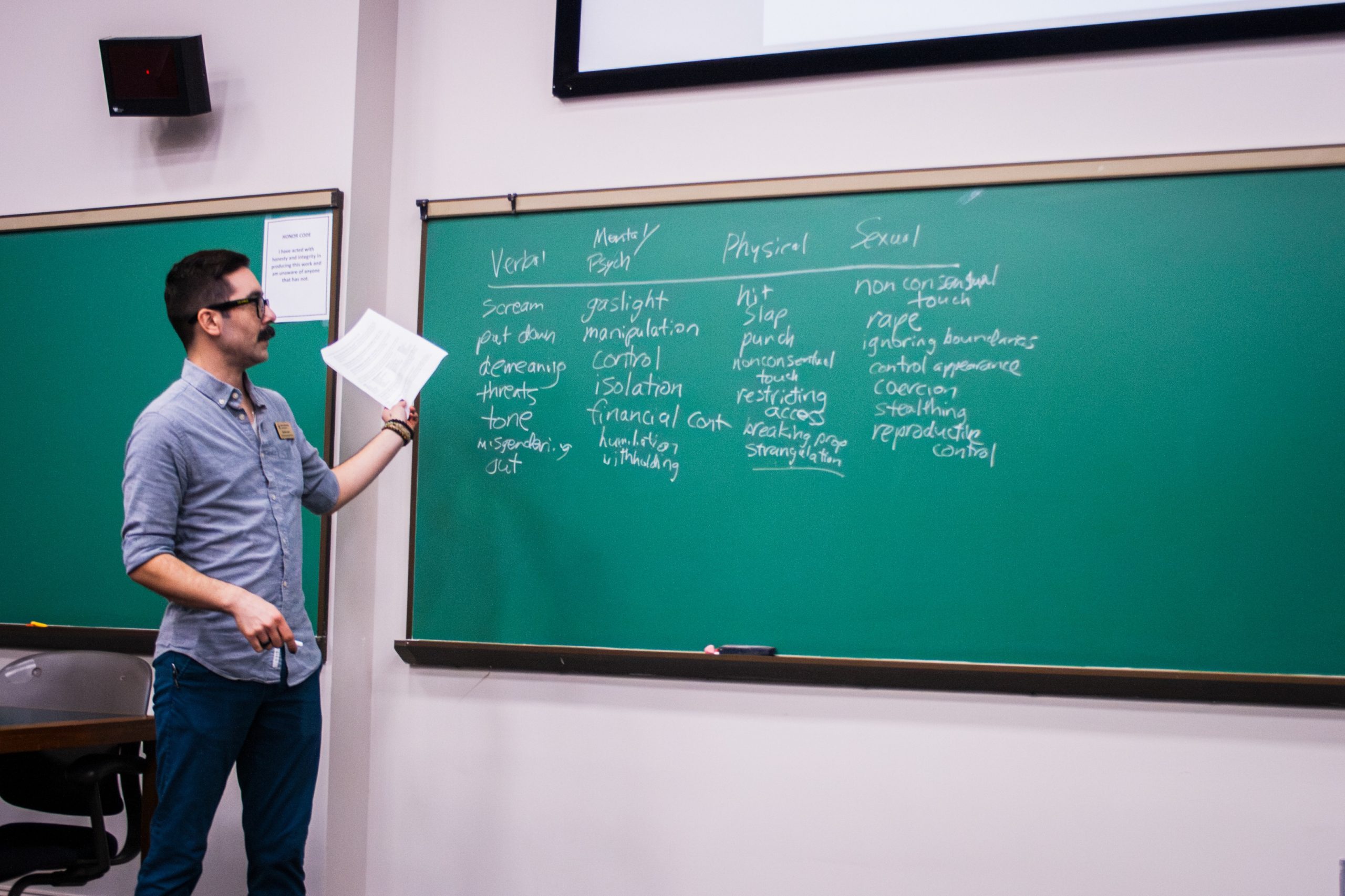
This February, the season of cherubic angels and much-too expensive chocolates from Target, it is also important to remember that roses have thorns. Close relationships – those romantic, familial, or even friendly, can carry abuse in any of its forms. In his recent workshop “Is That Abuse?”, Southwestern’s Project Director for Violence Prevention and Response Randall Ischy, spoke at length about the kinds of abuse, how to recognize them, and how we can flip the script to create healthy relationships.
For a person in an abusive relationship, it may become imperative that someone else find the courage to step up and help them. Any person in any situation may be experiencing abuse, so it is important for bystanders to have a vague understanding of what abuse may look like outside of media like books and movies. According to the National Library of Medicine, 1 in 4 women will experience sexual assault in their lifetime (National Library of Medicine). Beyond this, countless men, women, and nonbinary people experience abuse every year, every month, and every day. Ischy’s job on campus is to help inform, educate, and encourage people to prepare themselves for instances related to assault, abuse, or anything of the sort on or off campus.
During the workshop, we discussed the different ways abuse can take place, whether verbal, psychological, physical, or sexual. Unfortunately for survivors of abuse, most bystanders are much likelier to become concerned when abuse is in the later stages. However, harm can come to the person being abused can experience harm from any kind of abuse. Most forms fall into or between the four aforementioned categories: verbal, psychological or mental, physical, or sexual. Moving from left to right is generally how most abusive relationships progress as an abuser must attempt to normalize one form before moving on to another. But the four can also be very intertwined, especially considering boundaries, physical appearance, and other aspects.
Outside of well-known abusive actions such as screaming, hitting, gaslighting, and non-consentual sexual activity (also known as rape), this workshop also touched on the intersectionality and nuance abuse can have with neurodivergent and gender-diverse peoples. For these groups, the crossing of boundaries, purposeful misgendering, or outing, may also constitute abuse.
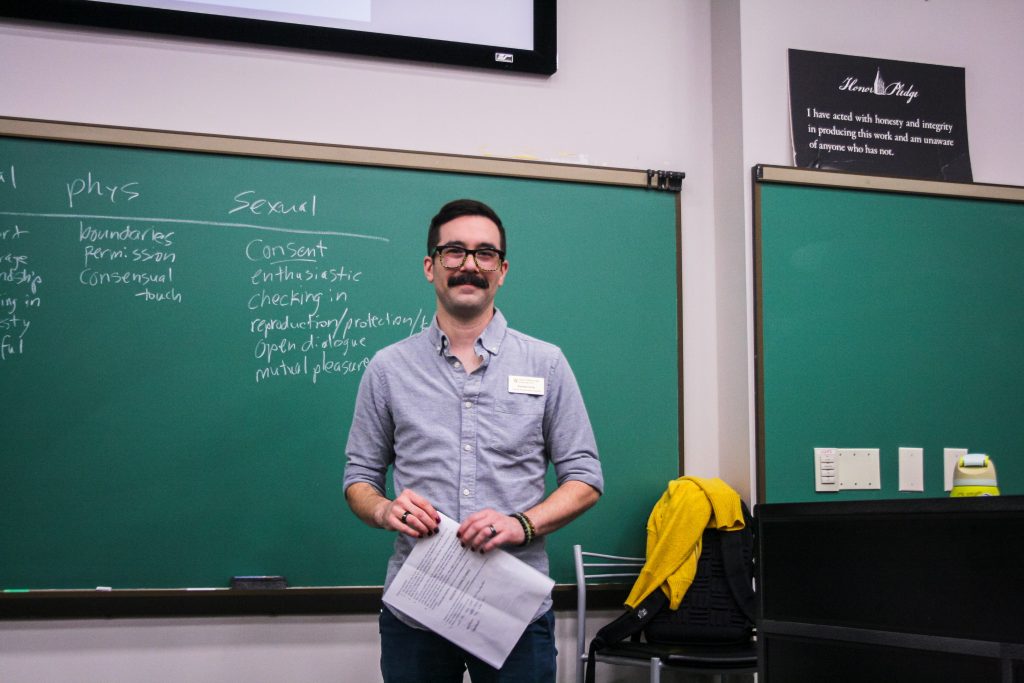
We can also use the framework of kinds of abuse to fill in what a healthy relationship should look like. Although all relationships are different, it is good to have a way in which to categorize the actions we take as romantic partners, friends, or family members. Verbal abuse like demeaning is taken and turned into compliments and support, consent is asked for and respected. Boundaries both physical and otherwise are kept by both parties.
Although abuse is often a tough subject to talk about, it is wonderful to remind ourselves of what we all deserve in a relationship – respect, consent, and genuineness in all things. As the proud boyfriend of my amazing partner, this workshop reminded me there is always more to work on even in a healthy relationship. Anyone can learn at these workshops, even with their heavy subject material, and I encourage more students to go out and learn.
If you or someone you know have experienced or may be experiencing abuse or sexual assault, please reach out to trusted authorities who can help. There are resources available and there is always a way out. Both Southwestern staff and other organizations are willing to help. For more information, here is the list of campus and local resources.