
Shadows and Light: An Evening of Music Honoring Resilience, Memory, and Hope

Share

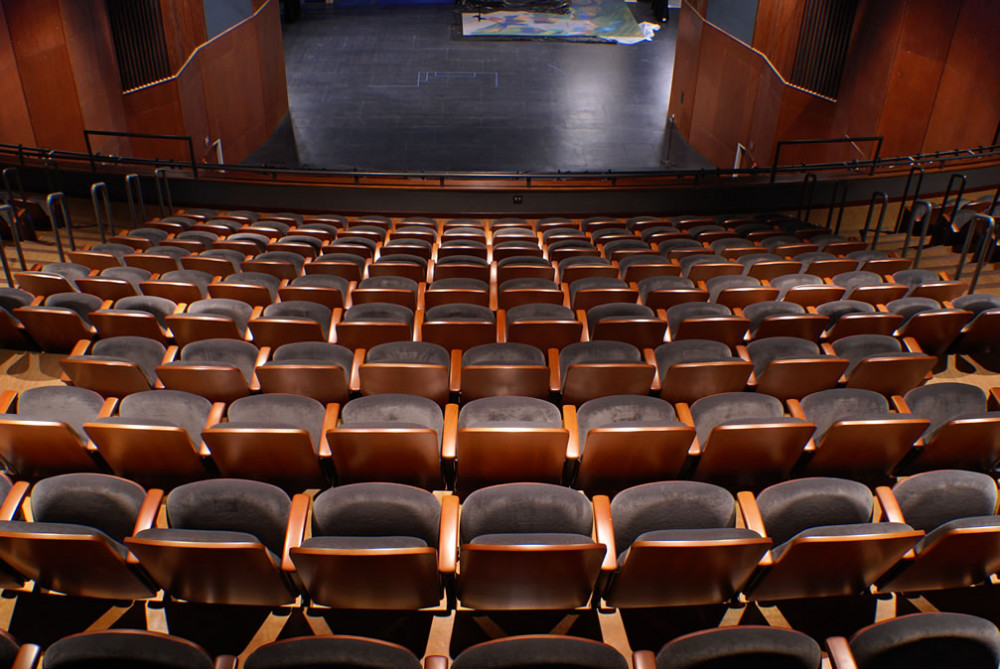
On Saturday, January 31, Southwestern University’s Sarofim School of Fine Arts presented Shadows and Light: Works of Remembrance and a World Premiere by SU Faculty Composer, Dr. Jason Hoogerhyde. In honor of International Holocaust Remembrance Day on January 27, this performance invited “reflection, remembrance, and renewal, offering moments of deep sorrow, profound resilience, and enduring hope.”
This faculty concert, featuring Hai Zheng (cello), Dr. Jeanne Hourez (piano), and Dr. Bruce Cain (baritone), opened with Ernest Bloch’s “Prayer,” a heartfelt piece evoking an atmosphere of reverence and calling the audience to meet the performers in the present moment as their music filled the auditorium. Following this piece were Bloch’s “Supplication,” representative of a passionate pleading; “Jewish Song,” characteristic of a traditional Eastern European Jewish folk song; and “Meditation Hebraique,” an anguished yet contemplative reflection. Inviting the listener to consider the history of the Jewish faith and its followers, these pieces highlighted the collaboration of the cello and piano in producing a beautifully moving sound that is deeply rooted in the history of a people.
As the final notes of Bloch’s 1924 composition resounded throughout the auditorium, Dr. Jason Hoogerhyde introduced his 2025 composition entitled The Light in the Trees. Commissioned by cellist Hai Zheng, Dr. Hoogerhyde explained that this piece was composed in the woods of northern Michigan over the past two summers. In the performance’s program, Dr. Hoogerhyde writes, “From my studio window, I see towering beech and pine trees. The view of these trees at varying times of day, with the light of the sun in various positions, provided the catalyst for my work’s three musical portraits.”
The first movement, “Shadows,” written for solo cello, “captures the murky depths of the forest when the light first emerges on the day.” Low, slow notes lend themselves to illustrate the darkness of the early morning hours as the sun creeps above the horizon, washing the earth in the gray light of dawn. The piece’s second movement, “Dappled Light,” performed by both cello and piano, “finds the sunlight of mid-morning to mid-afternoon dancing in between the trees and leaves in motion.” The introduction of the piano in this section creates a colorful melody as the notes tumble over each other, evoking the energy and warmth of the sunlight. Finally, “Dusk,” the third movement, “begins with the warm final glow of sunset, alighting the trees with orange, then red, returning to the shades of gray from the pre-dawn.” As the tempo slows and the piano fades, calling to mind the shadows of the dawn characterized in the first section, “the light of the day gives way to the light of the stars in the clearing of the tree canopy,” created by a twinkling plucking of the cello strings.
A contrast of light and shadow, Dr. Hoogerhyde’s composition “reminds us of the beauty that can emerge even from life’s most difficult passages.” This piece expresses the duality of pain and healing characteristic of all human life, inspiring reflection, hope, and compassion within the listener.
Following this premiere and expanding on the theme of compassion was John Williams’ “Elegy,” honoring the lives lost during the Holocaust and demonstrating the power of remembrance. Also composed by John Williams, they performedthe theme from Schindler’s List, a poignant and deeply moving piece evoking the devastation and suffering of the Holocaust and its long-lasting impacts.
The performance concluded with two selections from Donald McCullough’s Holocaust Cantata. Based on research of original music sung by those incarcerated in Nazi concentration camps, each of the 13 movements represents a different person or time in the Holocaust experience. “Tempo di Tango” juxtaposes J. Kropinski’s hopeful melody with the tragic reality of life and death in concentration camps, revealing the resilience of the Jewish community in the wake of persecution. With words originally in Polish, “The Train,” a baritone solo with piano and cello, demonstrates the uncertainty and sorrow of Jewish prisoners as they were separated from their loved ones and transported to concentration camps. The evening ended with a resounding message of the power of memory, hope, and compassion, touching the lives and hearts of each and every person in the audience.
This performance was the first of many exciting events hosted by the Sarofim School of Fine Arts this semester. Black History Month Musicale will take place on February 6 in the Alma Thomas Theater, BKLYN the Musical premieres February 20 in Heather Hall, and Southwestern University Choirs will perform on February 28 in the Alma Thomas Theater. We hope you’ll take advantage of these opportunities to celebrate our talented community!