
Message in a Bottle: Resisting the Assault on Attention

Share

Co-Written by: William Stephenson and Joshua Lee
In modern society, it is understood that personal devices, and their yet to be discovered progeny, will continue to be the primary means of communication for society at large into the foreseeable future. Other than the litany of privacy, security, and mental health concerns being birthed from this civilization-altering technology, one primary area of concern is the amount of personal time these personal devices consume. Countless hours spent allowing full attention towards a CPU with a screen, in some sort of exercise in connectedness. There has surely been massive innovation regarding the hardware and software capabilities – namely the economic size paired with strong compute; However, in the infinite wisdom of Stan Lee, “With great power, comes great responsibility”. It is plausible that humanity has become irresponsible with its time, and thus has allowed its attention to be captured by a system that demands engagement and seeks external validation, opposed to a system that promotes communal connection and moral confidence. This article will detail further this dire state of the contemporary attention economy, the philosophical implications of said economy, and finally, potential prescriptions in reclaiming one’s time.
The State of the Attention Economy
Many studies have shown the degree to which people have given over their attention for free to big tech companies, reducing their cognitive abilities in the process. A survey conducted by Harmony Healthcare IT revealed that American adults spend five hours daily on their phone. If drawn out over a 70-year lifespan, this amounts to 126,000 hours spent on one’s phone in a lifetime, or 14 years of one’s life. Another study from UT Austin highlighted how even the mere, visible presence of smartphones nearby can reduce our capacities for information processing and storage. This is because of the toll it takes on our cognition to not think about using our phones when they are nearby (Are Smartphones Making Us Stupid? | Psychology Today). The omnipresence of addictive technologies has contributed to several learning crises, including the increasingly concerning American literacy crisis. According to a 2024 survey, more than a quarter of middle school English teachers said they had to teach elementary reading skills such as phonics and word recognition repeatedly, skills which should have been mastered in much lower grades (America’s Reading Crisis That No One Wants to Talk About – Mother Jones). The U.S. Department of Education has determined that one in five adults are illiterate, struggling or failing to accomplish tasks which require synthesizing information, making simple inferences, and paraphrasing (Adult Literacy in the United States).
For a growing contingent of cultural theorists and economists, the current state of the attention economy is not one characterized primarily by capitalistic relations of profits and markets, but by a return to feudalistic relations of rent extraction. This phenomenon is often referred to as Technofeudalism. As strange as it sounds, it makes sense if you think about it. Consider Facebook. Facebook consists primarily of an algorithm owned mostly by one person, Mark Zuckerberg. Businesses pay certain fees to use the algorithm as a site for promoting their products. By engaging with Facebook, we “work” the algorithm with our data and attention, optimizing it more to meet our “needs”, much like a serf would work the land under feudalism. We are not paid for this work, but we enjoy it so much that we don’t even care, even though this unpaid labor makes it so that Mark Zuckerberg profits continuously from our attention and our information. Thus, we have the makings of a new feudalism, complete with a Lord (Mark Zuckerberg), vassals (businesses), and serfs (us). You can see this structure in Amazon, Tiktok, Uber, and many more applications as well. How did this all come about, and what do our lives look like now that our attention and information are endlessly mined by technofeudalists?
“Go Post About It”
It is of no doubt that the innovation of the internet and subsequent abundance of technological capability created in service of the internet, has propelled humanity forward exponentially, solving massive computation and data transfer limitations that have historically hindered rapid innovation. With great strides in any direction, however, comes new and potentially unforeseen consequences that, regardless of intention, have significant residual effects. The true effects of humanity’s exponential innovation and propagation of technology will not be known for hundreds, potentially thousands of years, as future historians examine our rise in capabilities. There are, however, present effects that do not require great scales of time to be known, and are noticeably altering the landscape of society.
Early internet forums, blogs and vlogs built the framework for an online identity, with the ability to act anonymously, should one choose. However, as advancements in handheld computing were combined with small, high resolution cameras, society has decided to leave anonymity, and enter the lucrative business of intimating oneself with an unknown group of followers. This rise in influencer culture has generated a few noticeable effects on society, such as the obsession with recording every seemingly important event, the fragmenting of information down into short form interactions (including legacy journalistic entities), and the overemphasis of the perception of oneself in the eyes of others. These three traits in tandem with one another have created an economy of “posting”, and subsequently “viewing”, that has foregone the qualitative nature of information, and has entered a quantitative era where persistence in posting, therefore garnering “engagement”, supersedes the efficacy of the information being presented. This has led to information bloat, misinformation, disinformation, and a large amount of individual time required to parse through the immense amount of information.
The sheer amount of posts, photos, notifications, and seemingly important information has kept society glued to its personal devices through a variety of mechanisms. Be it constant messaging notifications, the news, entertainment, gambling, or a numerous and persistent amount of activities that pull one away from their local environment, individuals are seemingly less engaged with each other physically, and now engaged in the facade of a digital world. Coffee shops and cafés, once bastions of social engagement, have turned into dens of isolation, where people now go to scroll through post after post rather than interacting face to face with those around them. Now, when faced with social discomfort and difficult to navigate situations, individuals completely disengage with their surroundings, and open their phone in some sort of exercise to demonstrate their attention is best served elsewhere, as opposed to their real environment. At concerts, for instance, more and more people are viewing musicians through the screen of their recording device as opposed to presently viewing the show.
Such an abundance of information has an added effect of not only directing people away from personal thought and self-reflection, but further towards the hyper-exposure to a multitude of conflicting personalities contained within internet, who will naturally impart some amount of information onto viewers. Withholding the obvious concerns of the distribution of misinformation, individuals begin to embody those they see on the internet, no matter the potentially jaded or misrepresented angle provided. This constant absorption of alternative thought, with no meaningful time spent in synthesis, has created a culture where people have begun to lose a sense of critical thinking and potential ulterior motives, and have embodied the values of people they do not actually know apart from their exposure online. This disavowing of critical thinking is sure to have long term implications on not only societal trends, but also innovative ones. If individuals continuously consume large quantities of information without legitimate synthesis or introspection, populist sentiments that have historically crippled societies will only have a larger opportunity to take hold en masse.
This loss of sense of self-realized values, in turn for online sentiments, is an extremely damaging quality of social media. The ability for individuals to completely manufacture how they are perceived, ultimately lying to those they are seeking engagement from, has distorted societal understandings of categories like beauty, success, wealth, and happiness, painting an idyllic and unreal picture. This distortion of reality has damaged tenets of the social fabric such as self-confidence, healthy boundaries, and actionable goals, replacing them with anxiety, unhealthy social interaction, and nearly unobtainable ends that require nearly unobtainable means. Society has thus pushed the limits of comparison, constantly measuring the self against the outcomes of others as the standard for individual success, opposed to self-realized goals. As Teddy Roosevelt once said “Comparison is the thief of joy”.
The brilliance in the innovation of the internet, and ultimately social technology, is its earnest ability to make certain aspects of life, largely communication, more accessible to the individual. The interconnectedness of the world has provided many benefits to society at scale, and the decentralization of information is higher than it has ever been, so it is not to say that society should throw the baby out with the bathwater, and completely stave off our relationship with social technology, rather meaningfully understand how we are becoming conditioned to this technology at scale. The better humans can understand the implications of the technology we have created, the better we will be able to moderate our interaction, and hopefully reclaim valuable hours lost consuming unused information, and in turn find time for ourselves and those around us.
Reclaiming Our Right to be Bored
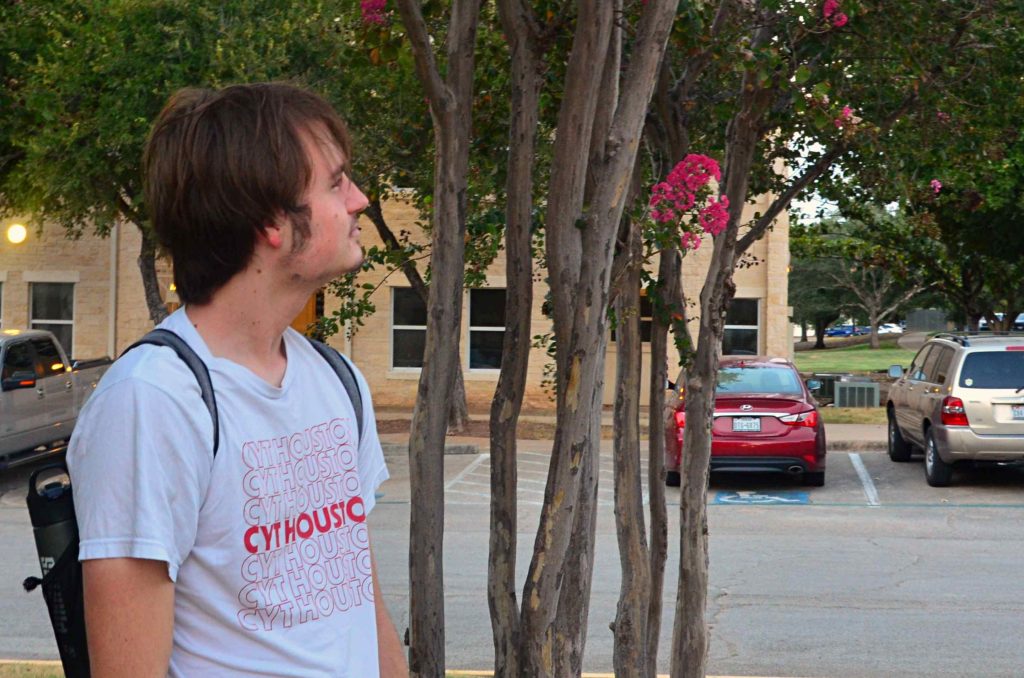
“Not all those who wander are lost.” This poignant line from J.R.R. Tolkien captures a certain spirit which has vanished in our technofeudal time. In an age where Big Tech companies demand that we fill every moment of our time with some form of stimulation and engagement online, we risk losing the value of under-stimulated states of being. We risk losing the value of boredom. Granted boredom isn’t always a comfortable state to be in, as it reflects a certain lack within ourselves. It reflects a certain dissatisfaction with an activity one is currently engaged in and often has us asking ourselves what we really want or who we really are. But we should welcome these questions. Boredom is not a void we need to immediately fill with something; boredom is a void we should embrace.
This is why the Tolkien quote is so profound. The Technofeudal economy is hostile to a wanderer, one who loves wrestling with ambiguity without immediately resolving it. It sees this wanderer as someone who is lost and needs a hearty dose of Tiktok scrolling to guide the traveler back towards social detraction. But the wanderer is not lost. On the contrary, they are aware that unknown and the uncertain are not things to be afraid of, but are rather their friends. They are in control of their time and their attention. They have learned to live with the gap of boredom. And in their wandering, creativity may even emerge.
So how does one become this wanderer? One suggestion is rather literal: go outside and walk or bike around. Don’t have a particular destination in mind when you do this; just let yourself go wherever the path takes you. If the path reaches an end, turn around or find a new one. And avoid having your phone on you, or at least, make it as invisible and unappealing as possible. This will allow you to go on little adventures, learning more about the environment you are in and embracing the unknown.
One other suggestion will take some space to unpack. In philosophy of mind, there is a popular idea called the Extended Mind Thesis, which states that cognition extends beyond our brains to the rest of our body and even external objects. On some level, this is a pretty mundane observation. It is not uncommon to see someone fidgeting with something or gesturing as they are thinking something through, whether out loud or not. This idea is very illuminating, however, as to why we might spend so much time on our phones. Our phones have become extensions of our brains in many ways, new things to fidget with, plan with, record our memories with, etc. The problem, of course, is that these new extensions of our brains are addictive machines which end up hindering our overall cognition just to make a few wealthy men even richer. What we need are different ways of extending cognition which resist the attention economy.
Thankfully, there are numerous options for this, one of which human beings have been doing for thousands of years: writing. Whatever you use your phone for, you can do similar things with a journal and your own mind. Do you need to plan out your week and set reminders? Use a journal/planner. Do you need something mindless to do with your hands? Draw repetitive patterns (I (Will) often doodle triangles repeatedly on my notes in class to help me process what’s being said). Do you need space to record thoughts, experiences, and memories? Write them down in a journal. By using writing as an extension of your thinking instead of your phone, you can better control your time, take back your attention, and provide time for boredom. Other healthy ways to extend your cognition involve similarly repetitive and manual activities such as knitting, crocheting, tying knots, simple cooking, mindless drawing, etc. All these activities do not require a ton of mental energy and allow your mind to wander peacefully.
Finally, as mentioned earlier, America is in the midst of a grave literacy crisis, borne of the assault on attention by Big Tech companies. Thus, another key way to regain our attention spans will be to learn how to read well for pleasure again. This does not mean you should pick up a large classic like Anna Karenina because it’s one of those books “you’re supposed to read”. You can pick something short; indeed, if you haven’t read in a while and want to rebuild the habit, starting small will probably help. Moreover, you should pick something you want to read, not something you feel that you have to read. This will also make it easier to rebuild the habit. If you would rather read Heated Rivalry than Moby Dick, then please do so.
As it currently stands, the attention economy threatens to turn us all into hyperactive, cognitively deficient anti-socialites for the sake of increasing the profits of a few wealthy men. By learning to think externally in healthier ways, we can reclaim our right to be bored and regain control over our attention. This by itself does not change the attention economy, but it’s where we must begin. If we cannot think, attend, and imagine properly, then we have no hope of ever rectifying this current state of affairs. The revolution begins with boredom.