
The Environmentalist: Does Southwestern Recycle?

Share

When someone pictures an environmental activist, they might envision a hippie living in some bucolic cottage, eating vegan, and chastising others for their choices. While this stereotype can apply to some, it does not apply to all. I am an environmentalist. Yes, I eat vegan, but I do not chastise others for their choices. Instead, I find that sharing sustainable alternatives to harmful practices is the best way to go about protecting the environment. In this series of articles, I intend to share with you, the reader, easily implemented tactics you can use to decrease your environmental impact.
This article will discuss recycling. Fun fact: an average of 5% of all discarded plastic actually gets recycled in the US. The rate is about 9% globally. Plastic use and pollution are large issues, which I will tackle in other articles. We are told that recycling mitigates these issues and serves to justify the inane amount of plastic we use. Whether this is the case depends on the infrastructure of the location in which you are recycling.
Recycling works much like regular waste disposal- it just has a different destination. In theory, you throw your water bottle in a small recycling bin in your building, it gets transferred to a larger one outdoors, and then a truck picks it up and takes it to a Material Recovery Facility (MRF), which then processes the plastic for reuse. However, this process can be disrupted at several levels. First, you can choose to throw your water bottle in the trash instead of recycling, preventing the rest of the process. Second, the small recycling bin might be emptied into a garbage bin instead of recycling. This is the most common issue. Many institutions have these small recycling bins, but neglect to dispose of them properly. More often than not, these institutions may not have large recycling bins at all. Dumpsters that need emptying daily run enterprises around $2000 a month. Adding a Large Recycling bin would nearly double that cost. An entity concerned with efficiency may decide that saving money supersedes environmental responsibility. Southwestern is one of these entities.
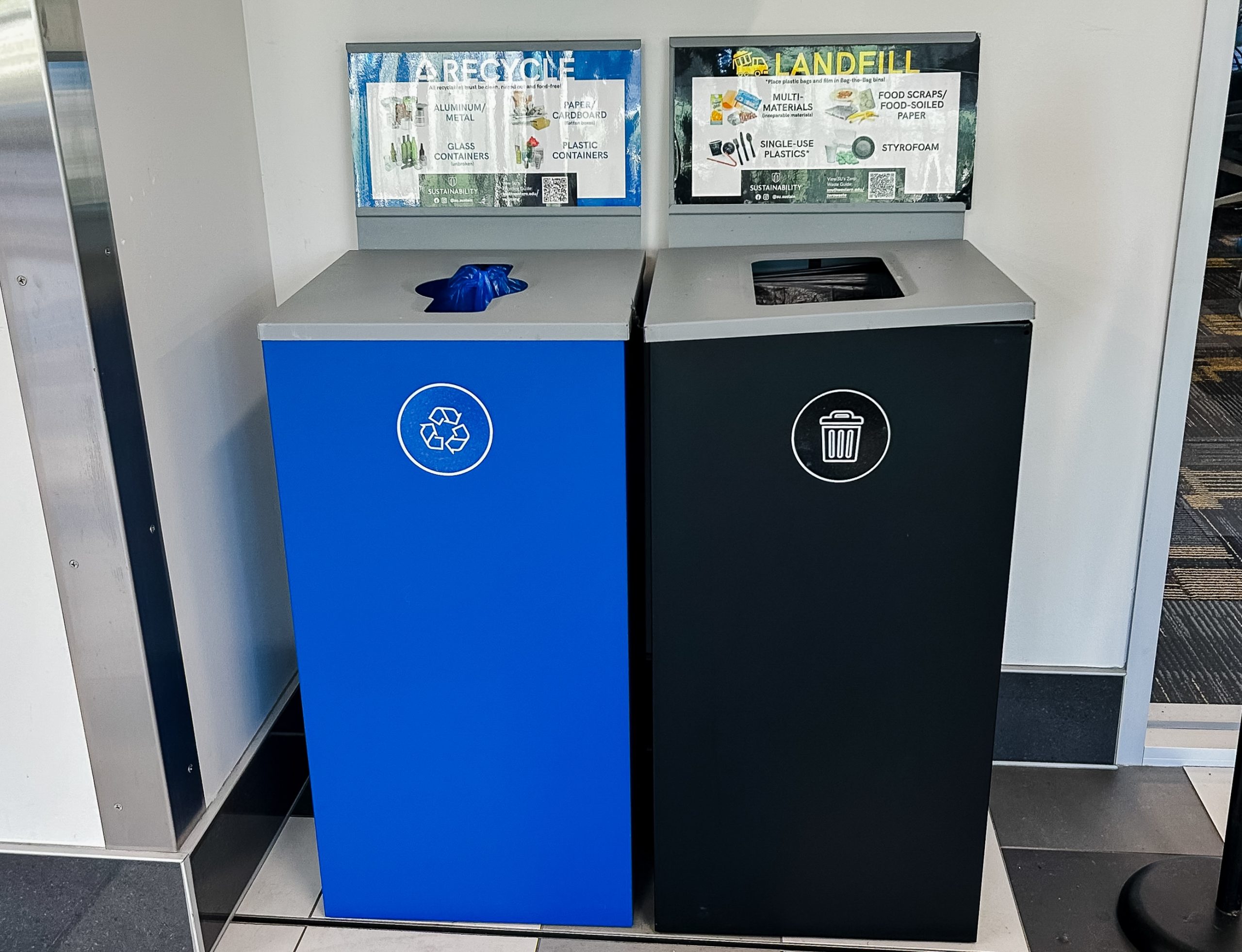
On the Southwestern Website, it clearly outlines protocol for waste disposal on a small, personal level. It also outlines where to find each kind of disposal bin. Where Southwestern has made a fatal mistake is in linking Waste Wizard. The software’s directive is to give you the pickup schedule for your waste based on your address. When you type in Southwestern’s address, nothing pops up. This software is meant to indicate the schedule for both recycling and landfill, but Southwestern does not appear for either context. Though this could mean nothing, it could also prove my argument.
Have you ever seen a dumpster-sized recycling bin on campus? Have you ever witnessed a recycling truck come to pick up the recycling? When you look at the designated small recycling bins, do they seem like they can be recycled? It’s evident that sustainability is not Southwestern’s priority.
So what can we do about this? The real answer is: not much. We can lobby, protest, email, and inquire, but at the end of the day, the duty falls onto the school. Some things that we can do to reduce our impact are to choose biodegradable options. Instead of plastic water bottles, use a reusable one. When you go grocery shopping, pick something that’s packaged in paper or cardboard instead of plastic. If you’re going out for coffee, consider bringing your own cup or forgoing a straw. Be conscious of your plastic use and mindful of where it goes.