
Six Paths to Service: Next Dimension Leadership Series With Manda Wittebort

Share

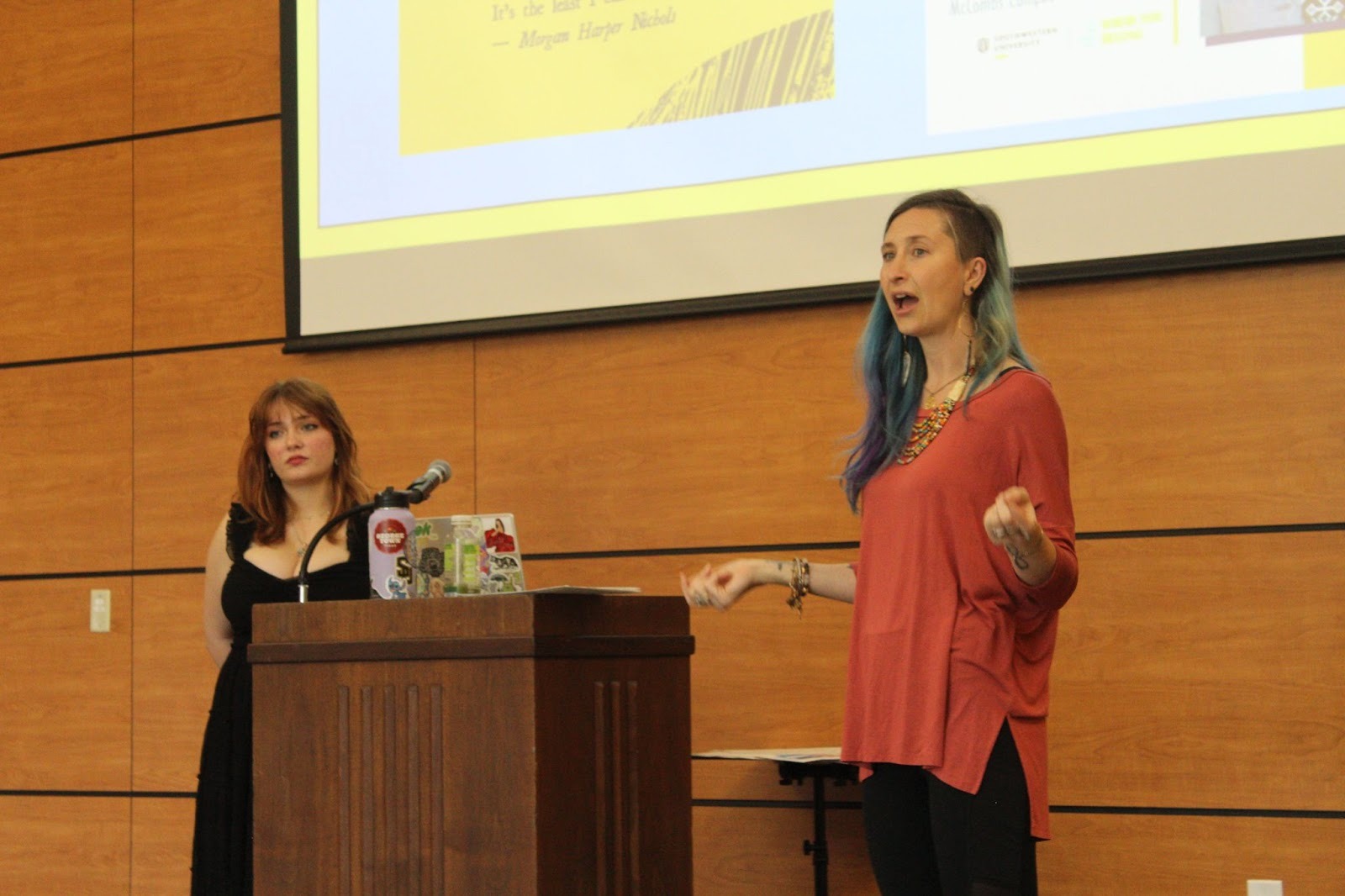
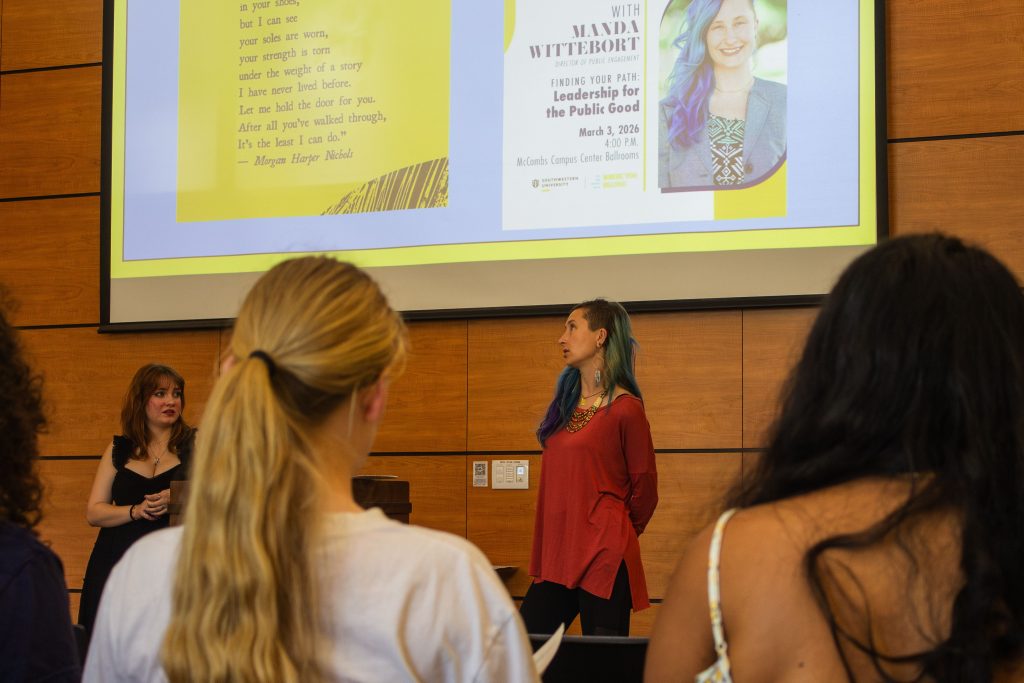
On March 3, the second episode of the Next Dimension Leadership Speaker Series took place, with Southwestern’s Director of Public Engagement, Manda Wittebort, serving as the primary presenter. As part of Southwestern University’s educational program on leadership and professional growth, this session focused on the six pathways to public service and civic engagement and how they could be applied to the community.
What are the Six Pathways to Public Service and Civic Engagement?
But first of all, what are these so-called pathways, and why should they be relevant to this session? Witterbort explains that these pathways describe a variety of ways in which one can contribute to the common good. All of these pathways are designed to intersect and overlap, highlighting the inherent interdependence of working toward the common good. However, the pathways are not linear. Because there is no single path to follow, contributors can enter and exit these pathways over time as they see fit. The six pathways presented were: Community Engaged Learning & Research, Direct Service, Policy & Governance, Community Organizing & Activism, Philanthropy, and Social Entrepreneurship & Corporate Social Responsibility.
The “Community-Engaged Learning & Research” track can be considered the easiest way to get started, in the case of our university community. This track begins by linking academic studies and research to issues identified by the community, which allows for the real-time application of acquired knowledge while serving as a foundation for action in addressing social problems. In other words, this path is a call to action and engagement. Wittebort illustrates that this first path begins with the simplest thing: our own personality. What do you like? What do you not like? With what do you identify with? What are your moral values? What goes against these values? And how could your beliefs and convictions benefit others? For example, at the university, what are some aspects you like about the place, and how could you help take care of it? By first analyzing your environment and evaluating aspects that you find inappropriate or in need of help, you are already fulfilling one of the paths toward the common good, as you come to understand what is right and what is wrong. The next step, in this case, would be to take action.
The second path is “Direct Service,” the first and simplest way to participate in true community service. This approach focuses on addressing the immediate needs of a community, often through active engagement with individuals or groups in need. Once you have considered how the community could be improved, the next step is to take direct action—as the name of this path suggests. For example, if you consider yourself an animal rights activist or environmentalist and identify a problem within the green spaces on the university campus, direct service would involve picking up trash if the area is littered or helping the local wildlife if you believe there is a pest infestation or disease affecting them. Everything in this path is about how much you can help without the need for third parties.
The third line of action—and perhaps the one with the greatest impact of the six—is “Policies & Governance.” Participating in this line of action involves engaging people in political processes, policy-making, and public governance to influence systemic change. The most effective way to get involved in this form of action is to run for local office to implement the desired changes without much delay. However, because this approach takes a long time and depends heavily on the influence you have within the community, there are other ways to participate in this effort that require broader community involvement. From signing petitions to requesting meetings with people in positions of authority, an individual—and preferably a group—can pursue this path without necessarily running for political office.
The fourth approach, which can also be considered a form of “Direct Service,” is “Philanthropy.” This simply involves donating resources, whether financial or in-kind, to support initiatives that serve the public good. There is no greater difficulty. Initiatives such as Pirate Pantry at our university fall into this category.
“Community Organizing & Activism” involves mobilizing individuals or groups to bring about social change through education and collective action. Within the university, this might involve starting a club or organizing a group dedicated to social protest. Anything aimed at demanding social change falls under this category.
The final pathway is “Social Entrepreneurship & Corporate Social Responsibility.” This track is intended only for those who wish to become entrepreneurs or who already own a business, as its goal is to use ethical business practices to address social or environmental challenges. The search for sustainable solutions that benefit communities through market and business influences can create a ripple effect within a community by promoting social activism through consumption.
Conclusion
The goal of the six pathways to public service and civic engagement is to raise awareness about the various ways people can take action in their communities. Whether through volunteering, advocating for causes, or participating in policymaking, at the end of the day, all these pathways are interconnected in one way or another to help achieve this goal. For example, how “Community-Engaged Learning & Research” intersects with “Direct Service,” or how “Philanthropy” can also be part of “Direct Service.” By recognizing the interconnected nature of these pathways, people can find meaningful ways to contribute to social change and strengthen their civic engagement efforts. The second part of the Next Level Leadership Speaker Series lecture teaches students how to build on the strengths of their local community while working together to develop plans for cultural and infrastructure changes that align with their shared values and aspirations.