
Black History Month: Navigating SU as a Person of Color

Share

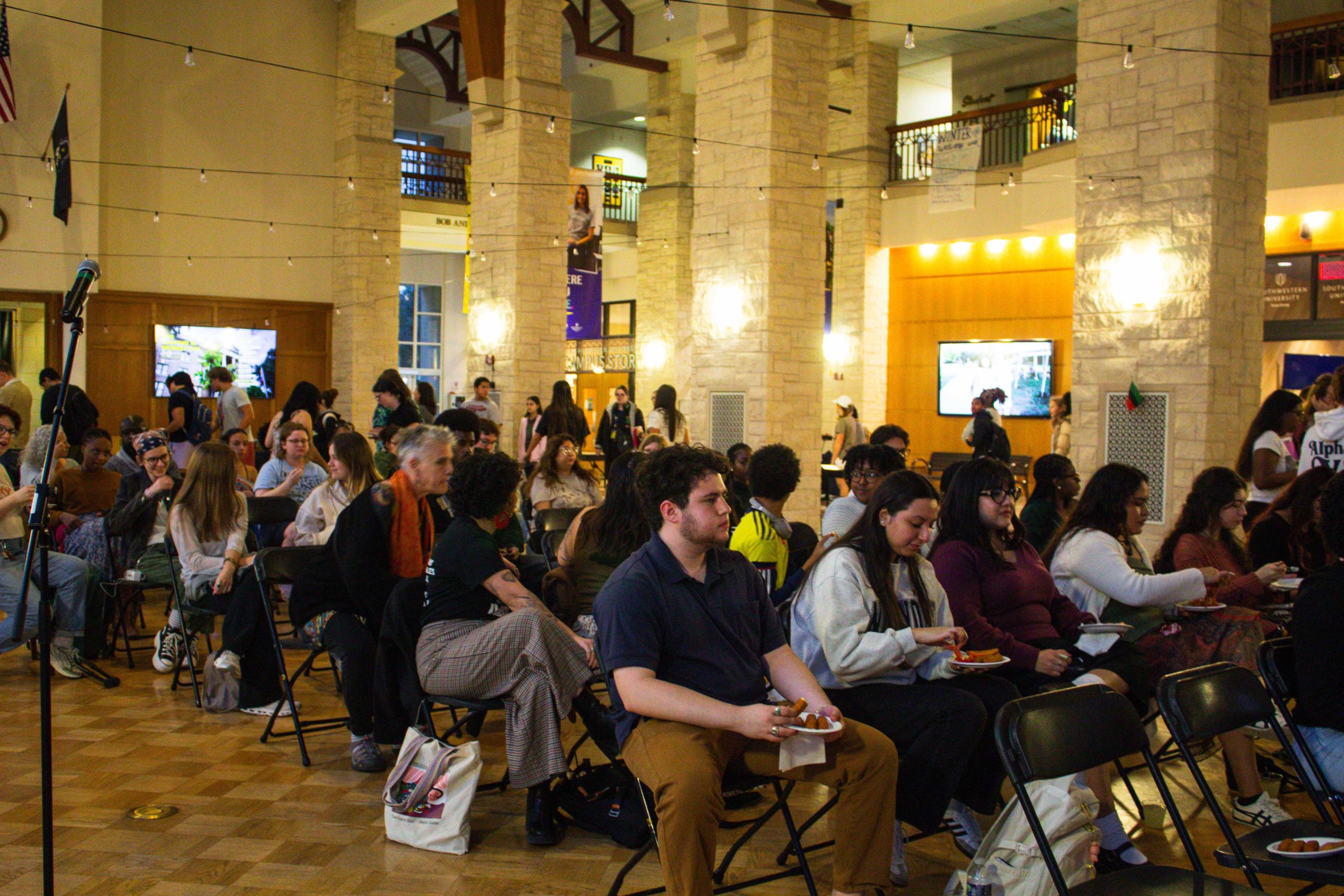
Black History Month is an annual celebration that takes place in February and honors the achievements and history of African Americans. It originated in 1926 as “Black History Week” and expanded to a month in 1976 to recognize the contributions of Black people throughout U.S. history. However, this iteration is a very special one as it marks the 100th anniversary of these festivities, which is why Southwestern University is also launching its annual panel “Navigating Southwestern University as a Person of Color” on Thursday, February 10, to kick off its own Black History Month.
Organized by the Race and Ethnicity Studies Program, this year’s event was moderated by Dr. Alex Goodwin, featuring Mia Santoscoy ‘26, Zaria Renfro ‘27, Dr. LB, and Dr. Robyn. With the goal of raising awareness about the different experiences of students of color at a white majority university, the event featured a wide range of minority representatives who shared their experiences and challenges in their academic and personal lives at Southwestern University. At the end of the discussion, the student audience shared their various concerns and questions about how the school deals with the experiences of people of color.
In this panel, four questions were the main focus of criticism and debate about the quality of life for people of color within the university: How do you function at Southwestern University as a person of color? Do you have any positive experiences as a person of color? Is there anything you think the institution could improve to support people of color? and finally, In what ways could the institution improve the environment for people of color? These were the responses from the featured representatives and student participants:
A non-white person, when moving within a predominantly white institution, often feels the need to perform above normal or suppress certain cultural characteristics to fit in socially. Dr. Robyn explained that the best solution in these cases is to avoid interiorized assimilation. Assimilation often requires people to abandon their cultural practices, traditions, or languages in order to fit into the dominant culture. This practice is especially harmful, as assimilation erodes a person’s sense of identity and disconnects them from their cultural heritage. By resisting assimilation, people of color can preserve and celebrate their unique cultural identities, which are often sources of pride, strength, and resilience.
On the other hand, both students and featuring representatives identified three significant sources of positive support in response to these challenges. Their most positive experiences as a person of color are rooted in Southwestern’s faculty of color, institutional cultural organizations (such as LatinXcel, Latinos Unidos, the Asian Student Association, and the Black Student Union), and most importantly the broader culture of support within the university community. These three elements provide a countermeasurement against internalized assimilation. By providing a sense of belonging, empowerment, and safety, through the acceptance and tolerance towards the students of color distinctive cultural customs, they resist alienation that often comes with trying to fit into spaces that were never designed for them in the first place.
Notwithstanding, the main problem identified at this panel was the lack of greater involvement by the institution in implementing better treatment for faculty and students of color at a systemic level. The complaint stems from the argued university’s lack of transparency in managing inclusive centers such as the JEDI Center, which, according to the student body, has provided poor support and communication with those in charge of managing this facility. There is also criticism of the lack of transparency regarding various relevant events at the school that affect the student community, whether they are of color or not. Finally, the biggest complaint involving the university faculty is the pay imbalance for faculty of color compared to the majority demographic. A new proposal is greater control by students interested in managing centers such as the JEDI Center and creating new, similar centers to increase diversity of support at the school. In addition, upperclassmen are asking the university for better publicity for events related to inclusion groups on Southwestern’s social media, arguing that self-promotion on bulletin boards has proven insufficient to attract new members.
The committee sincerely hopes that the discussions enriched the audience by sharing the experiences of students and faculty of color, so that these suggestions and complaints can be disseminated, as this is their ultimate goal.