
Life as A Disabled Student

Share

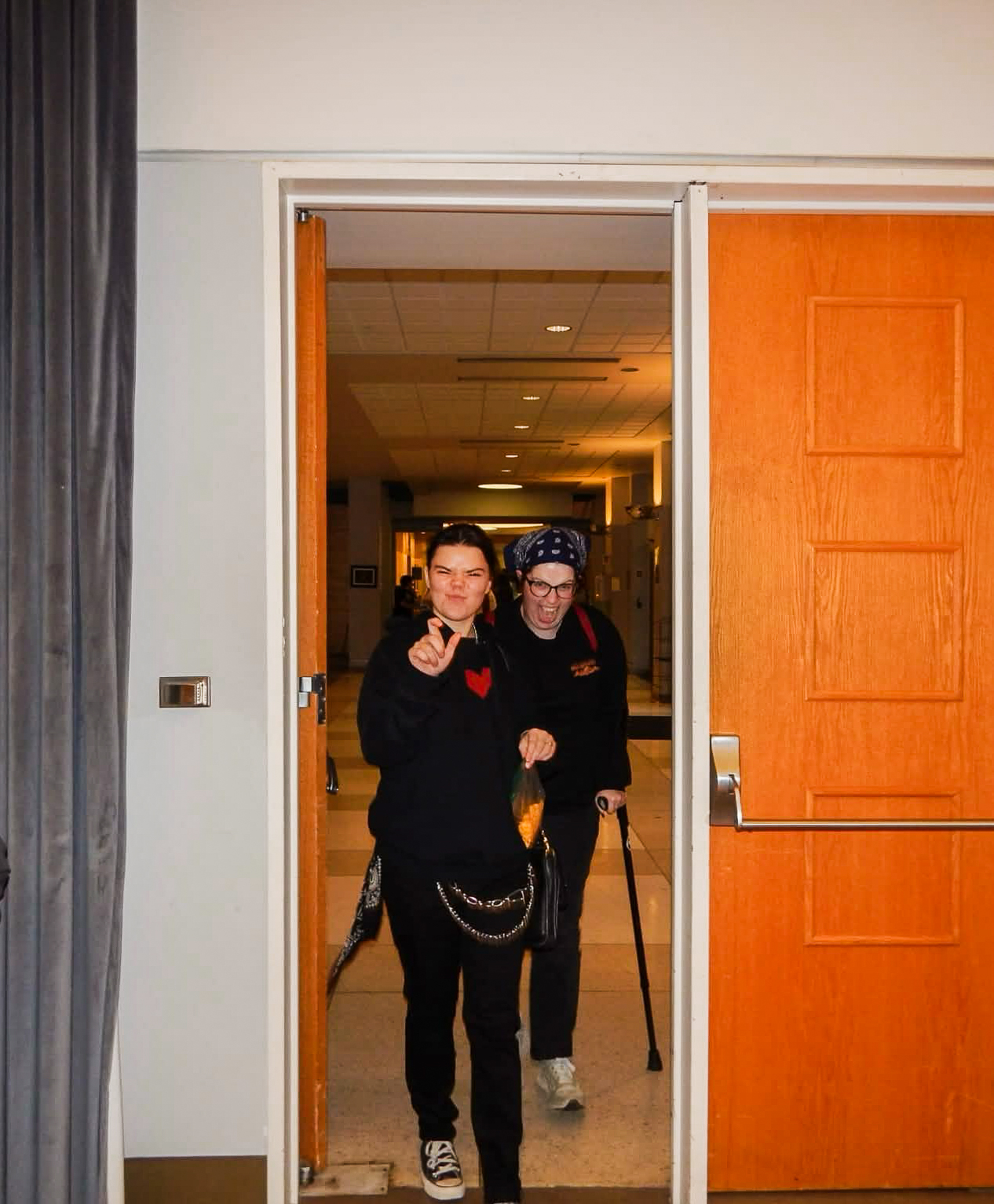
In the last couple of years, I cannot count the number of times I have been ostracized or othered, even if I can tell the person is acting out of the goodness of their heart and/or just trying to be helpful. I wish people would treat me like they treat everyone else, and only help me if I explicitly ask for it. This does not mean to stop holding the door open for someone who you think needs it, because presumably you would do it for anyone, whether or not they are disabled or chronically ill. However, this does mean to let me and others go about our daily life in the way that works for us, knowing that we will ask for help if and when we need it.
“The girl with the crutches.” “The girl with the cane.” “The girl who looks like she is in pain.” These are all things people have said to/about me. My issue is not that these things are untrue, but that they are exhausting. I am very well aware of these things because they affect me on a daily basis. Furthermore, as someone who is not only visibly disabled but also recognizable due to my relatively unique and personalized mobility aids, I am recognized by people I do not even know because they have seen my crutches before. This mostly happens at Southwestern, and it happened at my high school, but it gets tiring.
Broadly, some things that I wish people would keep in mind are that: Not all disabled/chronically ill people want to discuss their experiences, so make sure you do not assume that they are comfortable talking in depth about what they have gone through or what condition/s they manage in their lives. In my experience, my disability and chronic pain are things that I manage daily, so I do not often want to talk about them daily, especially with people I don’t know well. However, that is not to say that if you know someone well, you have the right to information. It really depends on the person, and you can ask if you are curious. But do not expect to get an answer from every single person you ask, even if you have a relationship (platonic, romantic, or otherwise) with someone.
As a chronically ill and disabled person, I do not want to speak for all of my peers on the matter of ostracism and othering, but I would like to put in my two cents, especially for people with little experience with these things. I understand that relating to chronic pain and being disabled are not things that everyone can directly empathize with, but sympathy can still be helpful. However, I would like to remind you that sympathy can sometimes end up being communicated as pity, which can be received in a hurtful manner, even if it was not provided with that intention.
Something I wish more people would keep in mind, both on and off campus, is that disabled people and people with chronic illnesses are still human beings, and should be treated as such. Furthermore, although I’m disabled and deal with chronic pain, I’m still a college student who works two part time jobs and has a social life. I’m a friend, a younger sibling, a lover of sunsets, an active member of Alpha Phi Omega and various other clubs and organizations, and so much more. I may deal with a lot more than the average person manages in their day, but I am a human being who relates to humanity at the end of the day.
If nothing else, please consider the following information:
3 Ways to Respect Disabled/Chronically Ill People
- Only offer help if prompted
- The things you think will be helpful may not be what they need.
- Do not ask for details
- You are not owed any information, no matter your relationship status.
- Do not make assumptions
- Not every disabled/chronically ill person is the same, just as not every able-bodied/non chronically ill person is the same.