
Well-Compensated or Pirated? A Survey of Student Worker Treatment at SU

Share

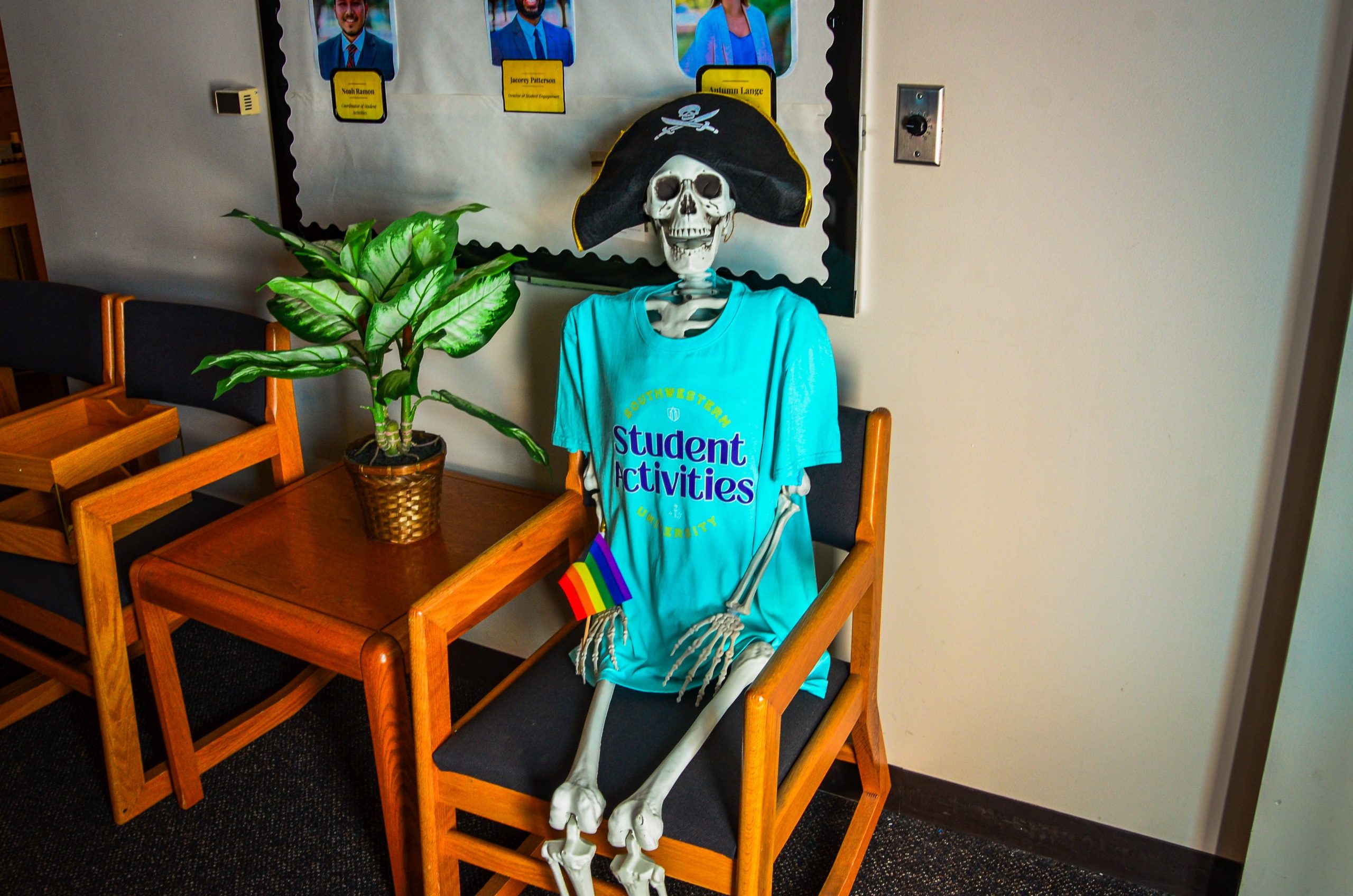
The prospects of on-campus employment are, among other things, students having conveniently located work that pays a fair amount and potentially fulfills their interests. Students also usually expect comfortable work environments, understanding employers, and flexible schedules. So how does Southwestern University fare in this regard? Does it treat its student employees well? To answer this question, we will analyze student worker treatment at SU based on three primary factors: employment infrastructure, work environment, and wages.
As for employment infrastructure, students seem to be mostly pleased with what SU has arranged. While it’s too early to speak on Handshake, students report that HireSU worked pretty well for them. “It was pretty easy to use,” commented junior Mia Perez, who works in facilities at Mundy. “You just type in what kind of jobs you’re looking for, and it’ll match it to a few places, and it’s very easy to get in contact with whoever you want to work for, and it’s easy to set up a schedule.” Mostly agreeing with Mia, freshman Lydia Allen, who works in the scene and costume shops for the Jones Theater as well as in the Welcome Center, commented, “HireSU worked pretty good for me. The only thing about HireSU is I’m always getting an email about openings for jobs.[…]. But I found them to be pretty smooth for applying, and people got back to me pretty quick.”
As for employment services in the SU portal, students have found the ability to log their own hours digitally greatly helpful. “I like that you’re able to do it yourself,” commented Lydia. “You don’t have to clock in at your job. I could, every Friday, just sit there and enter all my hours for the week. So I think that’s really convenient… The only problem is sometimes, if your supervisor forgets to approve your hours or something, which can happen, it’s a little stressful… but that’s just how it has to work, I guess, because of paying.”
What’s particularly uplifting about on-campus employment opportunities is that SU has been able to accommodate people who have physical disabilities. Freshman Aspen Boucher commented on how they were happy to find jobs which accommodate their physical disability. “I work for the box office in the Sarofim and I work for the Megaphone,” she said. “A lot of jobs that I was looking [at last semester] were with athletics and it’s all like, you have to either be able to move around a lot physically, and/or like lift 25 plus pounds. And I was like, ‘oh I can’t do that.’ What am I going to do? I need to make money. So I applied to the box office, went in to have my interview, it was a very smooth process, and I was very grateful that that existed and that they were hiring.” They went on to detail how their work for the Megaphone was similarly accommodating. “My work for the Megaphone is not a lot of like, interviews or having to go out and do things just because that’s not the kind of articles that I’m likely to write. I’ve had no issues with the Megaphone at all whatsoever.” (It’s almost like it’s the best place on campus to work or something…).
As for healthy work environments, reports are more mixed. For the most part, students report that their employers are kind and understanding. Sophomore Javir Foster, who works as a library assistant to the front desk, commented on how kind his employer is. “Jean is very nice,” he said. “She understands. She’s easy to talk to and she got us up to speed.” Junior Isabella Fernandez, who worked as an RA for two semesters, also commented on how sympathetic her employers were. “They were very understanding when I’m like, ‘Oh I have to switch this because I have something that came up that I have to prioritize,’” she said. However, Isabella also recounted difficulties with fellow residence life co-workers. “Some of them are very competitive, a little too competitive if you ask me.” She went on to detail how she had co-workers spreading rumors that she was an incompetent RA, and her boss believed those rumors over her own testimony. “I didn’t think that the coworkers who would be my support system—because being an RA is stressful—would try to attack me so they could get on higher with the bosses.”
Regarding work environments for facilities jobs, Mia remarked on a lack of training and a strong information gap between her and her employer(s). “When it came to me being actually ‘trained’, I really wasn’t,” she said. “I’ve picked it up now that I’ve been there a couple of years now… I will also say sometimes my boss asked me to do, like, certain things that weren’t really in the job description. And it’s just like, sometimes I can’t do it… I think it’s just an information gap of like, how she understands technology and realizing, like, that’s not really doable for a student worker or something like that.” However, Mia went on to remark that her doing work she was not previously informed about was probably due to the paucity of employees working in facilities rather than incompetence on the part of her employers. “We’re also connected to people in the mail room, and I know recently, they’ve been having, like, a lot of people who like work in the mail room come and work over here just to fill in the gaps of like, when we don’t have student workers there. And sometimes it’s vice versa. Like, I’ve gotten to work in the mail room a couple of times too.”
Lastly, there is the question of wages. Are SU student workers satisfied with what they are paid? Here, reports are still mixed. Mia reported that she is paid $12 an hour for her work in facilities, and she finds that that adequately reflects the work she is doing. “The reason I have a higher pay in facilities is that they entrust a lot more duties for me to do,” she remarked. Aspen, who is paid $8 an hour in both of their jobs, also finds that the pay adequately reflects the work they do. Commenting on their box office work during the day, “I think it’s a very fair amount of money because… most of the work is being a body in the box office just in case people get there really early.”
In slight disagreement, Lydia reflected on how she wished certain jobs paid more. Regarding her work in the scene shop, which pays $10 an hour, she commented, “Honestly, a lot of times for like, what we’re doing in the scene shop, I feel like it should be more pay, because it is exhausting. Sometimes like, we’re moving around a lot, you’re having to lift heavy stuff, we’re working outside a lot, I do think that could be higher pay.” Regarding her work in the Welcome Center, which pays $8 an hour, she remarked how that $8 minimum wage should really be changed to something higher. “I feel like in the economy we’re in, I feel like ten should be the baseline…We’re adults, and some of these jobs are adult jobs. And we should maybe be getting paid a little more.” When asked what other student jobs currently have lower wages than they should, Lydia replied, “I was looking at a posting recently for the new position in the JEDI office… and they had listed the job description and it was all kinds of stuff about like coordinating events and reaching out to people. And it said it was only $8 an hour… Someone who’s having to reach out to people and coordinate things shouldn’t be getting paid $8 an hour in my opinion.”
In summary, while SU has efficient employment infrastructure, understanding employers, and is accommodating to students with disabilities, some work environments can suffer from overly competitive co-workers and asymmetric information. In addition, while most are satisfied enough with what they are paid, there is an argument to be made that certain jobs should pay more given the kinds of work being done.
Overall though, most people expressed some degree of satisfaction with on-campus employment, and many even reported finding fulfillment in their work. “I love being able to share my thoughts and finding out that other people agree with me…” Aspen said of their work in the Megaphone.“Like, I wrote an article about Valentine’s Day that got released around Valentine’s Day. And a couple of different friends reached out to me individually and were like, ‘oh this paragraph and sentence resonated with me so deeply.’ So that was really nice to know that I do have thoughts and people want to listen to them… they mean something to people, which is great and super fun.” Javir commented on his library work saying, “I like helping people. Even if it’s with little things like finding a book or something, I feel a little bit, like, better that I help someone.” And Isabella finally reflected, “I wouldn’t change it, me being an RA, and I did feel happy from the stuff that I did do… I was like, ‘Okay, I’m someone making a difference in other people’s lives as an RA,’ which I try to do.”