
A Soundtrack for the Onset of Spring: Wind Ensemble and Orchestra Concert

Share

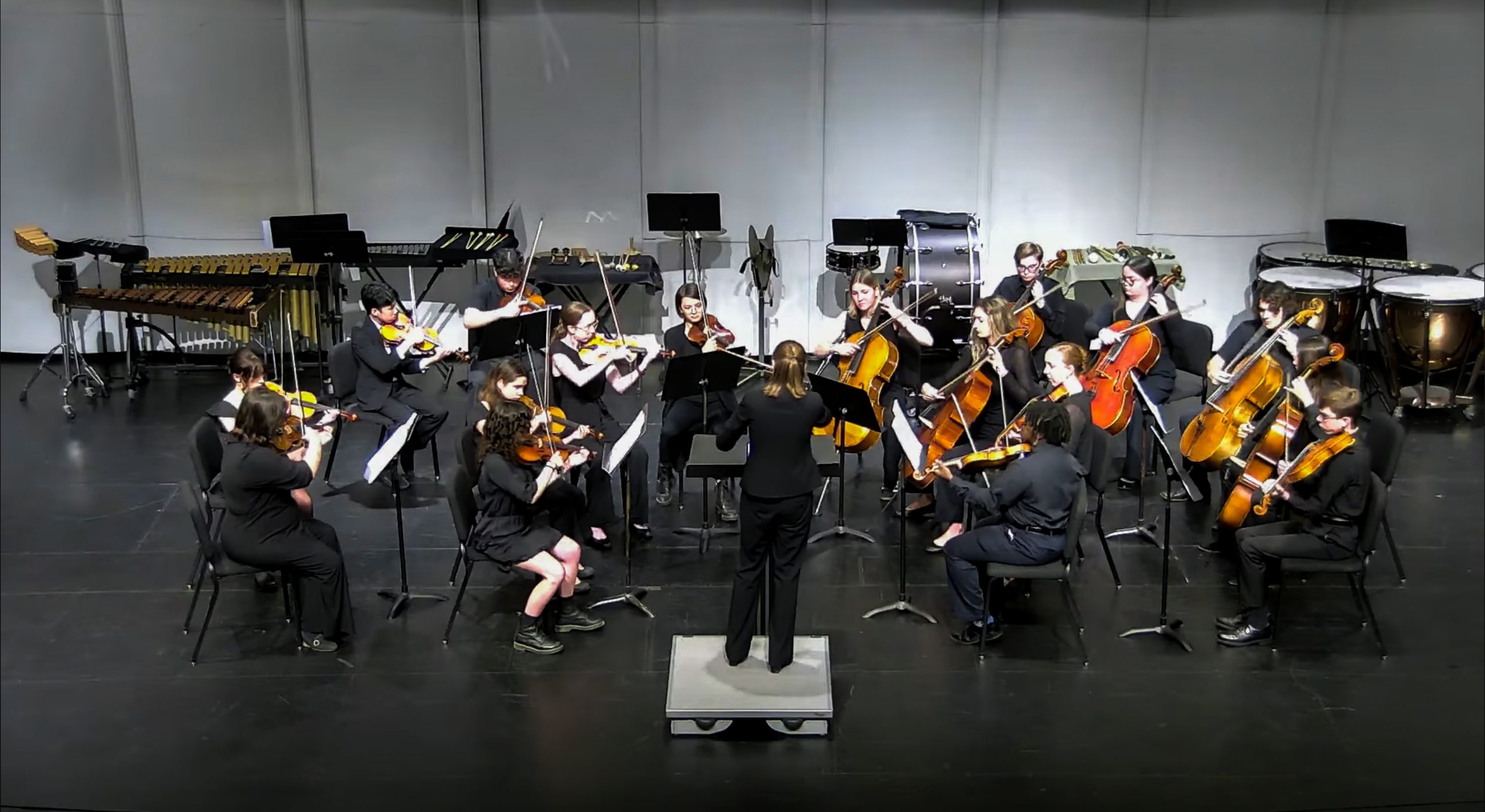
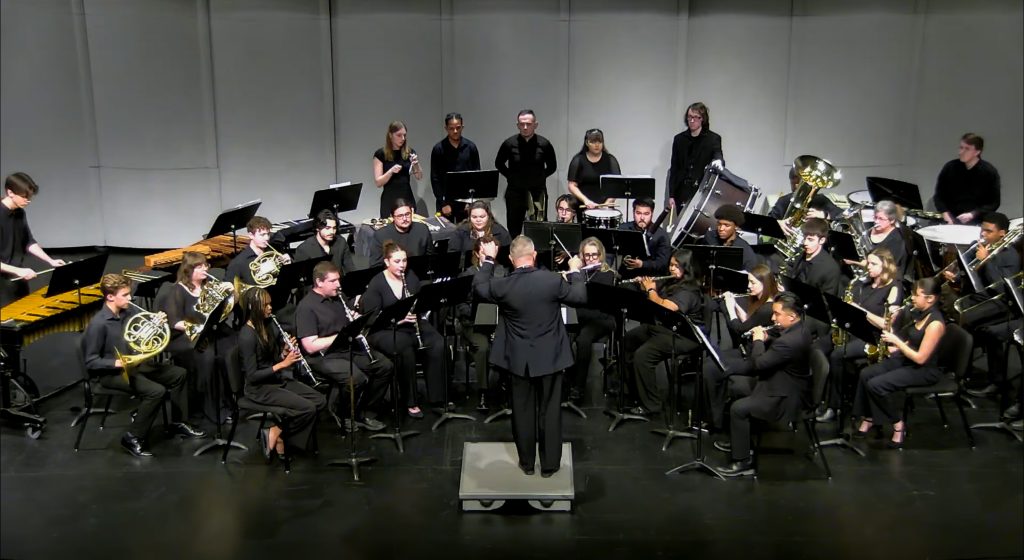
While birds chirped, churchgoers filed out of late afternoon services, and college students finally arose from their midday naps, others found the doors of the Alma Thomas Theatre wide open, welcoming them to the fourth orchestral concert of the academic year. Led by Emma Strub and David Norris, Southwestern’s own orchestra and wind ensemble swept the audience up into landscapes formed purely by sound. With the hard work of these amazing students, professors, and assisted by some local high school students, the concert brought forth four amazing pieces of work and one full suite of music to the ears of an attuned audience.
Unlike last year, the current concerts are fronted by Southwestern’s orchestra – a swap done for fairness since some audience members may trickle out during intermission. The first song played was “Strum” composed by Jesse Montgomery. A culmination of several versions of a string quartet written in 2006, Montgomery’s vision created an immersive melding between frenetic sounds and harmonies. According to an interview with Montgomery, “Strum” utilizes different texture motifs “layers of rhythmic or harmonic ostinati that string together to form a bed of sound for melodies to weave in and out” (Los Angeles Philharmonic). In more common terms, the intention of this work was to create a woven texture of sound – at once discordant and beautiful. To do this, Montgomery utilized a technique called pizzicato: plucking the strings of a string instrument rather than using the bow. The second piece was a more difficult challenge for Southwestern’s orchestra: the entirety of the “Saint Paul’s Suite” as composed by Gustav Holst (Indooroophilly Chamber Orchestra). Holst dedicated his work to his time at Saint Paul’s Girls School, where he worked as a director of music. The four movement work took inspiration from local folk music, jigs, and a sort of playfulness that may have encompassed his time at the school. Despite the difficulty of these pieces, the orchestra did wonderfully.
After a brief intermission, the Wind Ensemble took the stage to blow the audience away once more. Although they played three different pieces, the standout of the afternoon was “Pablo!” composed by Richard Meyer (Wind Repertory Project). The piece contains five distinct sections, each translating pieces of Pablo Picasso’s life into nothing but music. The main theme was based on Isaac Albeniz’s “Malaga” movement in “Iberia”, as Malaga was where Picasso was born. The rest of the piece were variations of this theme, attempting to reflect parts of Picasso’s life such as the Blue Period, Rose Period, cubist technique, and lifelong love of bullfights. Also featured in the set was “Choreography” by Robert Sheldon. Sheldon drew from modern ballet and theatre dancing, creating a rhythm that makes you want to tap your toes in time. The piece was at once reminiscent of Tchicovsky’s “Swan Lake” and musicals like Newsies, balancing the gentler sounds of ballet with the flashy rhythms of a musical performance.
As a whole, both the orchestra and wind ensemble did amazing work. Their concert was livestreamed by the university as usual and can be watched back at any time. The fine arts schedule can also be viewed via the website. If you can, please support our fine arts students by attending a performance; whether in person or online, they and their professors have worked incredibly hard to make such wonderful things happen!